Energy Tea and Detox Tea Use the Same Herbs for Different Promises






Lotus leaf, cassia seed, moringa, mulberry leaf and green tea show up on more kinds of packaging than a shopper expects, appearing on slimming pouches, on ten-day cleanse kits, and on plain tea blends that promise nothing beyond a good-tasting cup. The plants themselves barely change from one packet to the next, while the sentence printed beside them changes completely.
Since the five names are shared ground, the useful part of a label is smaller: which plant parts are in the bag, whether the blend contains caffeine, how many grams go into a serving, and whether one of the ingredients has a traditional job that the marketing word is quietly covering for. Those four checks work on any tea, and they are the ones worth running on Pure Energy & Refreshing Tea, where all five herbs, seven 3 g bags per pack and a follicular-phase positioning are printed in plain sight.
The last of those four checks is the one that decides how much the first three matter, because one of Pure's five herbs, cassia seed, has been brewed for centuries for a purpose that neither "energy" nor "detox" describes accurately.
Table of Contents
1. Quick Answer: Read Ingredients Before the Word Detox →
2. Side-by-Side Ingredient Table →
3. What Green Tea and Cassia Can Realistically Do →
4. Why Detox/Weight-Loss Frames Are Marketing →
Quick Answer: Read Ingredients Before the Word Detox
Neither "detox tea" nor "energy tea" names a defined preparation. Both are marketing categories, one sitting at the dramatic end of the promise scale and the other at the mild end, and a tea can move between them by changing its headline rather than its contents. So read the packet for four things before weighing any claim: the plant part listed, the presence of caffeine, the weight per serving, and whether any ingredient carries a traditional bowel or cleansing use. Everything else on the front of the box is a claim you still have to source.
Let the ingredient list make the first impression
The questions most people actually bring to an energy tea are practical ones about taste, caffeine and recognition, and a short list answers all three quickly. Pure prints five herbs, and its page describes the result as a light, refreshing cup where green tea supplies the tea character and the other four add a layered herbal finish. Seven bags is also a small enough commitment to judge entirely on flavor, which beats accepting a guarantee about how you will feel at the end of a month.
Caffeine is the one question with a firm answer, since green tea is one of the five, and it decides whether the word "energy" applies to your afternoon at all. The FDA cites 400 milligrams a day for most healthy adults as an amount not generally associated with negative effects, while being clear that sensitivity, pregnancy, certain conditions and some medications all shift that figure downward. Pure's page confirms the blend contains caffeine and stops there, with no milligrams per brewed cup.
Choose a cup that fits your day
That same caffeine is also what sets the clock, since a late cup can cost sleep, which is the practical reason this blend is written as a daytime tea rather than an evening one. Laicuherb places it further inside the month by positioning Pure for the follicular phase, and the clinical definition runs from the first day of menstruation through to ovulation, so the days after bleeding has stopped already sit inside that phase rather than opening a new one. Read the phase label as a suggested slot in a monthly routine rather than a schedule carrying consequences, then brew it the way the packet in your hand instructs. No app is needed to conclude that a light green tea blend suits the days after a period.
Side-by-Side Ingredient Table
| Ingredient in Pure | What to check on another tea's label |
|---|---|
| Green tea | Whether it appears at all, and whether a caffeine figure is stated |
| Cassia seed | Which plant the name refers to, and whether an amount per serving is given |
| Lotus leaf | Whether the label names the leaf specifically |
| Mulberry leaf | Whether it says leaf rather than simply "mulberry" |
| Moringa | Whether the plant part is identified |
Compare what labels say, rather than what slogans suggest
A comparison like this is only fair once two ingredient lists exist. Pure's five are published and can be checked directly, while a second tea has to be read from its own current label rather than judged from a product name that sounds familiar, which makes each row below a question to ask of that other pouch rather than evidence that it contains the same plants.
Naming the same plant is the easiest thing two blends have in common, and it says nothing about quantity. Pure's 3 g is the total weight of one bag rather than an amount per herb, and the listing does not divide that weight among the five.
Ask when the label stops short
Two numbers would settle most of the remaining doubt, and the current page gives neither: caffeine per brewed cup, and cassia seed per bag. They matter for different reasons, the first because it decides whether a second cup is sensible after midday, the second because cassia seed is the ingredient in this formula carrying a traditional bowel use, so its share of the blend is a fair question rather than a technicality. The listing links its quality and certifications page and a contact route for current-label questions, which is where both figures should come from if they affect your decision.
What Green Tea and Cassia Can Realistically Do
Green tea offers a familiar kind of lift
Of the five herbs, green tea is the one whose effect a drinker can notice, because caffeine reliably improves short-term alertness. Beyond alertness, NCCIH states that definite conclusions cannot yet be reached on whether green tea helps for most of the purposes it is sold for, and that the catechins and caffeine may have a modest effect on body weight at best, varying with the composition of the product and the activity level of the person drinking it. A bag of Pure therefore delivers a caffeine lift you can feel at a dose you cannot predict.
Dose is also where the two remaining safety points sit, since neither concerns a brewed cup at normal strength. The liver injuries on record were reported mainly in people taking green tea extracts in tablet or capsule form, and the interactions are drug-specific, with green tea lowering blood levels of nadolol and atorvastatin and an NCCIH-funded study finding an interaction with raloxifene. Anyone on regular medication should let a pharmacist read the five names before the tea becomes a habit.
Cassia seed calls for a more precise question
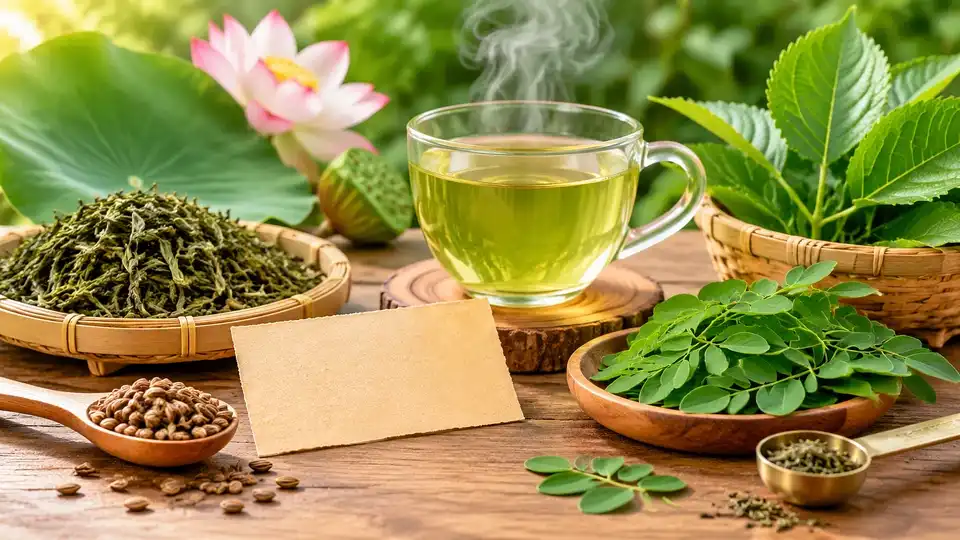
Cassia seed is the ingredient that decides whether two tea blends deserve to be compared at all. The seed is Cassiae semen, the dried mature seed of Cassia obtusifolia or Cassia tora, commonly consumed as a roasted tea across China, Korea and Japan. The standard modern review of it identifies anthraquinones as the primary functional constituents, with emodin, chrysophanol and rhein among them, and records the traditional uses as cleaning the liver, brightening the eyes and loosening the bowel to relieve constipation.
That line of traditional uses is what lets a single ingredient list carry two opposite stories. On a cleanse or slimming pouch the seed is there to do that documented job, and the pouch leans on the outcome. In this blend it is one roasted note among five, in an amount the label does not disclose, and the promise has moved to caffeine and refreshment instead.
The same review frames the reported activity as largely preclinical, meaning laboratory and animal work with the mechanisms of the main compounds still requiring investigation, which is a long way from a trial of people brewing this tea each morning. The English name creates a second confusion worth clearing, since "cassia" in a spice aisle refers to cinnamon bark from a Cinnamomum tree, a different plant altogether. If you are pregnant or nursing, take medication, manage a digestive condition, or react strongly to laxative-type herbs, cassia seed is the ingredient to raise with a clinician before the cup becomes a daily habit.
Why Detox/Weight-Loss Frames Are Marketing
A compelling story still needs evidence
Once an ingredient list starts carrying promises about toxins, it stops being a matter of taste, because that category has been tested and has not passed. NCCIH reports that studies of detox and cleanse programs in people are few and generally limited by weak design, small participant numbers or lack of peer review, that a 2015 review found no compelling research supporting detox diets for weight management or for eliminating toxins, and that long-term effects remain unstudied. Enforcement has followed the claims rather than the herbs, with the FDA and FTC acting against companies selling detox products over hidden ingredients and false claims about treating serious disease.
The part of that safety record most relevant to a tea bag concerns laxatives, since programs built on them can cause diarrhea, dehydration and poor nutrient absorption. The category is candid about that expectation, since some cleanse tea listings state senna leaf in their ingredients while others advertise being laxative-free as a feature. Asking how much cassia seed sits inside a 3 g bag follows from there. None of this is a study of Pure or of any single tea, and none of it says a competing product is unsafe, but it does tell you which side of a published evidence line a label has chosen to stand on.
Documents answer a different question
When a label declines to give numbers, paperwork is the next place a careful buyer looks, and Pure's certificate line covers COI, COA, HALAL, ISO-FSSC and HACCP. Documents of that type answer manufacturing and testing questions about a specific production run, which is genuinely worth checking against a batch. What they cannot do is describe what a brewed cup will do to your alertness or your digestion, or substitute for the amounts the ingredient list leaves out.
Choose a Clearer Tea Ritual With Laicuherb
A tea purchase is worth making when you can explain it to yourself afterwards in facts rather than feelings: the five herbs appeal to you, seven single bags fit your routine, and you know the cup brings green tea caffeine along with it. That is the entire case for trying Pure Energy & Refreshing Tea as the daytime cup in a monthly rotation, and it claims nothing beyond being a drink you want to brew again. If a caffeine figure or a plant name is what decides the purchase, get it settled on the current label before checkout rather than after.
Conclusion
Pure is easiest to judge on its own terms, and those terms are concrete: seven 3 g bags, five herbs, green tea caffeine, and a light cup positioned for the days after your period. The two figures the page omits, caffeine per cup and cassia seed per bag, matter more than the name of the category if you are sensitive to caffeine or prefer to avoid herbs with a bowel tradition. Take the same four checks to any second pouch you are considering, because an energy blend and a detox tea can be packed from the identical five ingredients and remain two different purchases, and only the label tells you which one is in front of you.
READ THE LABEL, NOT THE SLOGAN
A tea is easier to judge when its plant parts, caffeine, serving weight, and traditional uses are clear. Category words such as energy and detox do not replace those facts.
FAQ
Q: 1. Is Pure caffeine-free?
A: No. Green tea is one of the five herbs, which means the blend contains caffeine, and the product page states this plainly. No caffeine amount per brewed cup is given.
Q: 2. What comes in one pack?
A: Seven tea bags at 3 g each. That weight covers the blended contents of one bag rather than the amount of any single ingredient.
Q: 3. Must I drink it on a particular cycle day?
A: No. Pure is positioned for the follicular phase, but the listing sets no required day and promises no phase-specific outcome, so the timing should follow your own caffeine sensitivity and routine.
Q: 4. Is cassia seed the same as cassia cinnamon?
A: No. Cassia seed is Cassiae semen, from Cassia obtusifolia or Cassia tora, whereas cassia cinnamon is bark from a Cinnamomum species. The shared English word is a naming accident.
Q: 5. Is this a detox tea?
A: No. The product page states that Pure is not a detox, fat-burning or weight-loss product, and describes it as a green tea and herbal blend brewed as a beverage.
References
1. National Center for Complementary and Integrative Health. "Detoxes" and "Cleanses": What You Need To Know. Verified source
2. National Center for Complementary and Integrative Health. Green Tea. Verified source
3. Dong, X., Fu, J., Yin, X., et al. Cassiae semen: A review of its phytochemistry and pharmacology. Molecular Medicine Reports, 16(3), 2331–2346, 2017. Verified source
4. U.S. Food and Drug Administration. Spilling the Beans: How Much Caffeine is Too Much? Verified source
5. National Library of Medicine, NCBI Bookshelf. The Normal Menstrual Cycle and the Control of Ovulation. Verified source
6. Laicuherb. Pure Energy & Refreshing Tea, Cycle Harmony product listing. Verified source
Related Readings
Herbal Sleep Tea vs Melatonin: Which One Is Right for You?
Sea Buckthorn Oil vs Eye Drops for Dry Eyes: Two Different Jobs