Herbal Sleep Tea vs Melatonin: Which One Is Right for You?






Melatonin and herbal sleep tea are sold as if they were two versions of the same night. They are not. One is a timing signal. The other is a warm, caffeine-free drink people use when the clock is already right and the body will not settle.
Melatonin is a hormone your brain makes in darkness. A supplement copies that cue. It is most useful when your body clock is out of line with the wall clock: jet lag, a delayed sleep pattern, some shift-work nights. A herbal sleep tea does not reset that clock. Chamomile, valerian, lemon balm, and ashwagandha blends are used for tension, racing thoughts, and the wired feeling that can show up even at a sensible bedtime.
If sleep has been bad for weeks, or daytime function is falling apart, that is a clinician visit first. Neither bottle replaces that.
Table of Contents
1. What Is the Difference Between Herbal Sleep Tea and Melatonin? →
What Is the Difference Between Herbal Sleep Tea and Melatonin?
| Melatonin | Herbal sleep tea | |
|---|---|---|
| Job | Timing signal for the body clock | Evening wind-down drink |
| Best fit | Jet lag, delayed sleep phase | Tension at bedtime; some luteal-phase nights |
| What it does not do | Fix a mind that will not quiet at the right hour | Shift a 3 a.m. sleep window back to 11 p.m. |
| Evidence | Stronger for clock problems than for chronic insomnia | Ritual plus herb research; extract trials are not tea trials |
| Form | Tablet, gummy, liquid | Brewed cup |
Melatonin tells the brain that biological night has started. Herbal sleep tea is a caffeine-free cup meant to help you wind down. Pick the one that matches the problem you actually have.
If the issue is “I only get sleepy at 3 a.m.,” melatonin is the more direct tool. If the issue is “I am tired at 11 p.m. and still cannot drop,” a caffeine-free herbal cup is the more practical first try.
How Melatonin Works
Your pineal gland releases melatonin as light falls. A supplement adds to that signal and can nudge sleep timing earlier or later. NCCIH summarizes the cleaner uses: jet lag and delayed sleep-wake phase disorder. Shift-work evidence is smaller and mixed.
A 2013 meta-analysis found melatonin modestly shortened the time to fall asleep and added a little total sleep in primary sleep disorders. The American Academy of Sleep Medicine’s 2017 insomnia guideline and the American College of Physicians did not find enough evidence to recommend melatonin as treatment for chronic insomnia. Cognitive behavioral therapy for insomnia remains the first-line care for that diagnosis.
Dose and clock matter more than brand stories. For clock-shifting, a smaller amount taken earlier in the evening is often the studied pattern, not a large pill at lights-out. Product content is another issue. A 2017 test of retail melatonin found many bottles did not match the label, and some contained serotonin. Short-term use looks mild for most adults (headache, grogginess, vivid dreams). People on blood thinners, people with epilepsy, pregnant or nursing people, and anyone giving melatonin to a child should talk to a clinician first.
How Herbal Sleep Tea Works
A sleep tea is not a hormone. It is hot water, a caffeine-free blend, and ten quiet minutes. Sleep Foundation’s roundup of bedtime teas sits in that lane: chamomile, valerian, lemon balm, and similar herbs used for relaxation, not for moving the body clock.
Ashwagandha is the herb with the most recent sleep papers, and those papers are about extracts. A 2021 review found small sleep improvements in adults taking ashwagandha extract, with clearer signals at higher extract doses and longer use. A cup of tea is not that protocol. Citing extract trials as if they were a tea bag overstates what is in the mug.
What the cup can honestly offer is warmth, a caffeine-free ritual, and herbs traditionally used to settle. It will not treat insomnia, lower a lab cortisol number on a schedule, or pull a delayed clock forward.
When Melatonin Fits
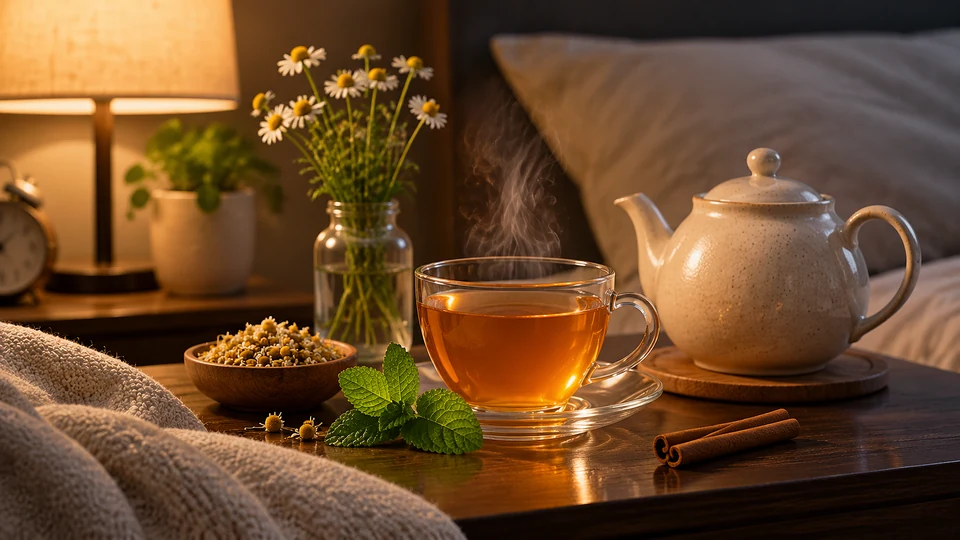
Use melatonin when timing is the problem: eastbound jet lag, a sleep window that sits hours later than you need, or a clinician-guided plan for delayed sleep-wake phase. Auld’s 2017 review in Sleep Medicine Reviews found the more convincing melatonin results in delayed sleep phase and in some primary insomnia latency data, not in a general “sleep quality” promise.
Start low, take it earlier than bedtime if the goal is clock-shifting, and pick a product with third-party testing because labels have been unreliable. If you wake groggy, that is a reason to stop or change the plan with a clinician, not a reason to keep raising the dose.
When Herbal Tea Fits
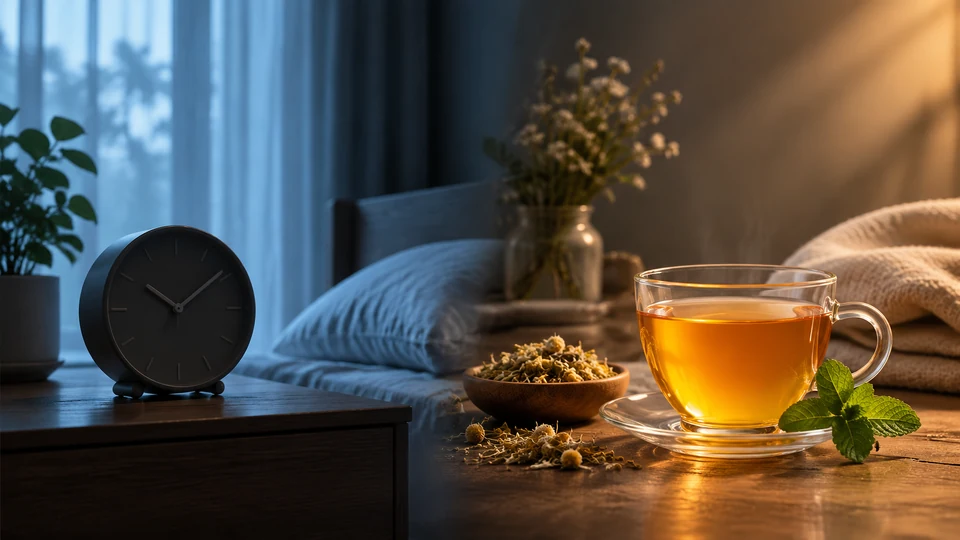
Use a herbal sleep tea when the clock is roughly right and the body is still switched on. That includes ordinary tension at night. It also includes a pattern many cycling people already know: worse sleep in the week before a period.
Baker and Driver (2007) described lighter sleep, more awakenings, and a higher core temperature in the late luteal phase in ovulating women. That is a progesterone-linked body change, not proof that the internal clock has jumped. Melatonin is a weak match for “I am sleepy at the right hour and still too warm, tight, or mentally loud.” A caffeine-free cup is a closer match for that night, as comfort and ritual, not as a hormone treatment. Rest Calm & Sleep Tea sits in that lane: an evening luteal-phase blend (spearmint, cinnamon, ginger, ashwagandha, and related herbs), packed as 10 bags of 8 g, for brewing and drinking only.
If you are pregnant, nursing, on thyroid or sedative medicines, or have a diagnosed sleep disorder, take the ingredient list to a pharmacist or physician before you make it a habit.
Can You Use Both?
They do different jobs, so using both is not automatically a conflict. It is also not required. If luteal-week tea is enough, melatonin is extra. If a timed melatonin dose already lands you in bed on schedule and you fall asleep once you are there, the tea is optional.
Anyone stacking supplements with prescription drugs, pregnancy, nursing, thyroid disease, or a sleep diagnosis should ask a clinician first. There is no safe blanket statement that melatonin and every herbal blend have no interactions.
Two weeks of one tool, with a note of bedtime, clock time, and how the night felt, tells you more than another comparison chart.
Conclusion
Melatonin is for a clock that is in the wrong hour. Herbal sleep tea is for a body that will not settle at the right hour. Match the tool to the night you actually have, and treat lasting insomnia as medical care, not as a shopping standoff. If the pattern is luteal-week tension at a normal bedtime, the product page for Rest Calm & Sleep Tea is the cup in this comparison.
MATCH THE TOOL TO THE NIGHT
Melatonin is a timing signal. Herbal sleep tea is an optional caffeine-free wind-down ritual. Neither should replace clinical care for persistent or disruptive sleep problems.
FAQ
Q: 1. Is melatonin better than herbal sleep tea?
A: Neither is better in general. Melatonin is the closer tool for jet lag and a delayed sleep window. A caffeine-free herbal tea is the closer tool for tension at a normal bedtime.
Q: 2. Will herbal sleep tea reset my body clock?
A: No. It does not replace melatonin’s timing signal.
Q: 3. Can I drink sleep tea every night?
A: A caffeine-free blend can be an evening habit for many healthy adults. If nights are bad for weeks, or you take other medicines, ask a clinician. Luteal-week use is a pattern, not a medical schedule.
Q: 4. Does ashwagandha in tea work like ashwagandha extract?
A: No. The sleep trials that get cited are extract studies, often at higher daily doses over weeks. A tea bag is not that study.
Q: 5. When should I skip both and see a doctor?
A: Sleep trouble lasting more than a few weeks, loud snoring or gasping, daytime crashes, new medicines, pregnancy, or a known sleep or thyroid diagnosis.
References
1. Ferracioli-Oda, E., Qawasmi, A., & Bloch, M. H. (2013). Meta-analysis: melatonin for the treatment of primary sleep disorders. PLoS ONE, 8(5), e63773. Verified source
2. Sateia, M. J., Buysse, D. J., Krystal, A. D., Neubauer, D. N., & Heald, J. L. (2017). Clinical practice guideline for the pharmacologic treatment of chronic insomnia in adults. Journal of Clinical Sleep Medicine, 13(2), 307–349. Verified source
3. National Center for Complementary and Integrative Health. Melatonin: What You Need To Know. Verified source
4. Cheah, K. L., Norhayati, M. N., Husniati Yaacob, L., & Abdul Rahman, R. (2021). Effect of Ashwagandha (Withania somnifera) extract on sleep: A systematic review and meta-analysis. PLoS ONE, 16(9), e0257843. Verified source
5. Baker, F. C., & Driver, H. S. (2007). Circadian rhythms, sleep, and the menstrual cycle. Sleep Medicine, 8(6), 613–622. Verified source
6. Erland, L. A. E., & Saxena, P. K. (2017). Melatonin natural health products and supplements: presence of serotonin and significant variability of melatonin content. Journal of Clinical Sleep Medicine, 13(2), 275–281. Verified source
Related Readings
Sea Buckthorn Oil vs Eye Drops for Dry Eyes: Two Different Jobs