Herbal Supplements for Postpartum Recovery: What's Safe to Consider






Table of Contents
→ Quick Answer: Postpartum Supplement Safety Requires Individual Assessment—Start With Your OB-GYN
→ How Postpartum Hormones Affect Skin, Hair, and Energy
→ General Safety Framework for Supplements During Breastfeeding
→ Specific Ingredients: What Limited Data Shows
→ What to Discuss With Your Healthcare Provider Before Starting
→ When Symptoms Need Medical Attention, Not Supplements
→ Make Supplement Decisions Together with Your Doctor and Laicuherb
After a baby, the body you live in can feel slightly unfamiliar. Sleep arrives in scraps. Skin that looked fine in pregnancy may turn dry or reactive, and a few months later hair that felt thick starts coming out in the shower. Somewhere in that fog, a well-meaning person mentions a supplement.
If you are breastfeeding, the question gets sharper. What is actually safe to take right now, and who decided that?
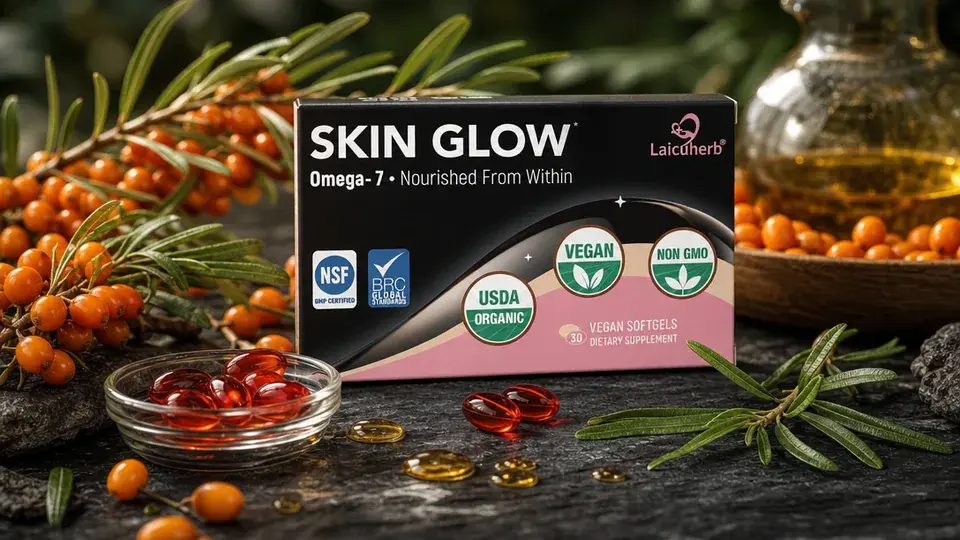
There is no universal postpartum herb list. Safety depends on the birth you had, the medicines you are on, how the baby is doing, and whether you are nursing. Laicuherb Skin Glow Supplement is a vegan whole-fruit sea buckthorn softgel made for general adult use. It is not a postpartum or nursing product. People often find it while looking for skin support. Finding it is not the same as being cleared to start it.

Quick Answer: Postpartum Supplement Safety Requires Individual Assessment—Start With Your OB-GYN
“Is this supplement safe postpartum?” almost always means: it depends on you.
ACOG treats the months after birth — the fourth trimester — as ongoing, tailored care rather than a single visit or a shared vitamin list [1]. What fits someone who is formula feeding six months after an uncomplicated delivery is not automatically what fits someone breastfeeding at six weeks. The useful first step is the clinician who already knows the delivery and the infant.
How Postpartum Hormones Affect Skin, Hair, and Energy
Estrogen and progesterone sit high through pregnancy and drop sharply after birth. In the weeks that follow, skin can feel drier, more reactive, or more breakout-prone. Hair that felt full in late pregnancy often sheds a few months later. Dermatologists call that telogen effluvium: a shift in the hair cycle after a major hormonal change, not a new disease you failed to treat [3]. Energy usually tracks sleep, feeding, and physical recovery more closely than any oil.
These shifts are common. Many settle over months on their own. Feeling uncomfortable is not, by itself, a reason to start an unstudied capsule.
General Safety Framework for Supplements During Breastfeeding
If you are nursing, caution is the default.
LactMed, from the U.S. National Library of Medicine, summarizes what is known about medicines and some herbs in human milk [6]. For a large share of herbal products, human lactation data are thin. In 2012, Budzynska and colleagues reviewed herbs used during breastfeeding and found that use is common while quality safety data for most herbs are not [2]. Thin data is not permission to start. “Natural” is not a milk-safety claim.
Take the actual label — serving size, plant part, whole oil versus extract — to your lactation consultant or OB-GYN. A plant-based beauty softgel has not been studied in nursing pairs just because it is herbal.
Specific Ingredients: What Limited Data Shows
Fish-oil or algae omega-3s show up more often in prenatal and postnatal nutrition talks than sea buckthorn oil does. Dose still belongs with your clinician. That literature does not transfer to omega-7 palmitoleic acid, and it does not clear a sea buckthorn softgel.
Skin Glow is organic sea buckthorn oil, 1000 mg per serving (2 vegan softgels, 15 servings), with a labeled omega 3-6-7-9 split that includes 324 mg palmitoleic acid [7]. Human lactation safety data for sea buckthorn oil are limited. Current research does not establish safety while nursing. Do not add it during the postpartum year unless your clinician agrees.
The product is for general adult oral use. It is not a topical oil and not a prenatal. If you want the facts panel for an appointment, hello@laicuherb.com can send product information.
What to Discuss With Your Healthcare Provider Before Starting
Write the questions down before the visit so you leave with a yes, a no, or a wait.
Ask whether to keep the prenatal vitamin, and whether a new oil would duplicate fat-soluble nutrients. Say whether you are breastfeeding, and ask what is known about this specific ingredient in human milk. List prescriptions such as antidepressants, blood-pressure medicines, or thyroid hormone. Mention autoimmune disease, thyroid history, or postpartum depression. Describe how the baby is feeding, and any new rash or unusual fussiness.
ACOG’s postpartum visit is built around individualized recovery, mood, sleep, feeding, and ongoing conditions [1]. A printed label in the room is easier to work with than a screenshot of a claim.
When Symptoms Need Medical Attention, Not Supplements
Some symptoms are not a supplement trial.
CDC data show about 1 in 8 women with a recent live birth reported symptoms of postpartum depression [8]. ACOG’s patient guidance is to contact your OB-GYN or another clinician right away if depression or anxiety is getting in the way of daily life, rather than waiting for a routine checkup [5]. If you have thoughts of harming yourself, call or text 988 in the U.S.
Hair shedding that feels far beyond the usual postpartum shift, crushing fatigue even when you get a stretch of sleep, temperature intolerance, or hair loss plus weight change belongs in a thyroid conversation. Postpartum thyroiditis is a recognized condition after birth [4]. Painful rashes, heavy or unexpected bleeding, or foul discharge are obstetric problems. The next step is an exam and, often, bloodwork.
Conclusion
Postpartum is a slower decision window. Herbal supplements are neither banned nor automatically cleared. Skin Glow is a vegan whole-fruit sea buckthorn softgel for general adults: 2 capsules, 15 servings, 1000 mg oil [7]. It was not designed for pregnancy, lactation, or postpartum recovery. If you are in that year, start with the clinician who already follows you and the baby.
FAQ
1. Is Skin Glow Supplement safe to take while breastfeeding?
Laicuherb Skin Glow Supplement is a vegan oral softgel made from whole sea buckthorn fruit oil, with a published Supplement Facts panel. It carries Non-GMO, Vegan, and Gluten-Free declarations, and the sea buckthorn oil series is produced with BRCGS and NSF cGMP facility documentation. Those credentials describe manufacturing quality and ingredient transparency, not a lactation study. If you are breastfeeding, take the label to your OB-GYN or lactation consultant before you start. Certificate files: view the general sea buckthorn certification information.
2. Can I take Skin Glow Supplement during pregnancy?
This product is for general adult use. Any supplement in pregnancy should be reviewed first with your prenatal care provider [7].
3. Is this product a topical skincare oil?
No. Skin Glow Supplement is a vegan oral softgel: 2 capsules per serving, 15 servings per bottle. It is not for topical use [7].
Make Supplement Decisions Together with Your Doctor and Laicuherb
Postpartum choices sit better with the care team in the room. Skin Glow is a plant omega oil for ordinary adult routines, not a fourth-trimester formula. If you are pregnant, breastfeeding, or in the postpartum year, take the Supplement Facts to your OB-GYN, midwife, pediatrician, or lactation consultant before you start.
Product specs for that conversation: hello@laicuherb.com.
AUTHOR INFORMATION
Content written and reviewed by: Laicuherb Editorial Team
Nature, For Every State of You
Laicuherb is a functional herbal wellness brand that blends herbal wisdom with modern science to support women's wellness throughout the cycle and the changing states of everyday life.
Its product range includes phase-positioned herbal teas for hot-water brewing and botanical supplements such as Himalayan Sea Buckthorn Oil in oral vegan softgels. The products have different formats, ingredients, serving instructions, and safety considerations, so each product should be read and used according to its own label.
Related Readings
Top 10 Nutrients for Improving Skin Elasticity Today? →
Top Benefits of Gluten Free Non GMO Vegan Sea Buckthorn Oil? →
What Are Palmitoleic Acid Benefits for Health and Wellness? →
References
[1] American College of Obstetricians and Gynecologists. Optimizing postpartum care. ACOG Committee Opinion No. 736.
[2] Budzynska, K., Gardner, Z. E., Dugoua, J. J., Low Dog, T., & Gardiner, P. (2012). Systematic review of breastfeeding and herbs. Breastfeeding Medicine, 7(6), 489–503.
[3] Mirallas, O., & Grimalt, R. (2016). The postpartum telogen effluvium fallacy. Skin Appendage Disorders, 1(4), 198–201.
[4] Stagnaro-Green, A. (2012). Approach to the patient with postpartum thyroiditis. The Journal of Clinical Endocrinology & Metabolism, 97(2), 334–342.
[5] American College of Obstetricians and Gynecologists. Postpartum Depression.
[6] U.S. National Library of Medicine. Drugs and Lactation Database (LactMed).
[7] Laicuherb. Skin Glow Supplement.
[8] Centers for Disease Control and Prevention. Symptoms of Depression Among Women.