Hormone Balance Tea: What ‘Balance’ Means—and Evidence Does Not Show






If you've put "hormone balance tea" into a search box lately, you aren't just looking for a beverage. You're likely looking for a way to feel like yourself again. The exhaustion, the mood shifts that feel like they belong to someone else, the bloating that makes your favorite jeans feel like a betrayal—these symptoms are real.
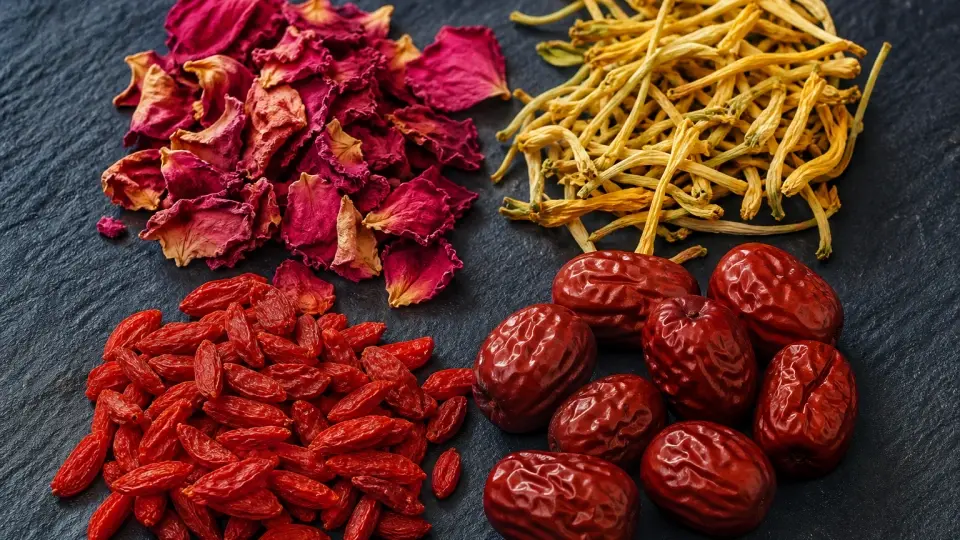
But the word "balance" is often a hollow promise. It's not a medical diagnosis; it's not a blood test result; it's not a guarantee a brand can actually back up. In this post, we're cutting through the marketing noise to tell you what the term truly means and where the evidence stops, so you can read a label without being sold a miracle. Laicuherb, the team behind Bloom Hormone Balance Tea, takes this transparency seriously. Bloom is a food-grade combination of seven botanicals—rose, red jujube, ginger, goji berry, honeysuckle, brown sugar, and flaccid aster. It's an 8g ritual designed for the ovulatory window, and we're going to be very honest about what it can and can't do.

Quick Answer: 'Hormone Balance' Is a Broad Wellness Phrase, Not a Diagnosis
Let's be blunt: a hormone-balancing tea is a wellness descriptor, not a medical prescription. When an endocrinologist runs a hormone panel, they are looking for specific levels of estrogen, progesterone, or cortisol compared to established reference ranges. No lab report will ever give you a single score for "balance," and no regulator (like the FDA) has defined what a "balanced" hormone looks like in a tea cup. When a brand uses the word, they are talking about a feeling or an ideal, not a clinical outcome. That distinction matters for your expectations. A tea might be a comforting addition to your day, but the label itself isn't a biological switch. The first step to a better wellness routine is understanding that gap between a mood and a measurement.
How Consumers and Marketers Use the Word 'Balance'
Consumers use "balance" to describe a state of being where their body isn't fighting them. Marketers use the same word because it sounds scientific without actually committing to a specific medical claim. This creates a massive lexical gap. Very few botanicals have direct, peer-reviewed clinical research showing they can move the needle on your blood work.
There are outliers: randomized studies showed spearmint tea could slightly reduce androgen levels in women with PCOS, with one notable clinical trial showing a significant testosterone dip after thirty days of twice-daily consumption. But those results are specific to spearmint. Most ingredients in a "hormone balance tea" blend don't have that level of data. It's not necessarily dishonesty; it's just that the label tells you more about the brand's "vibe" than its biology. When you see the word balance, ask: Who is measuring this, and what is the baseline?
What Normal Hormone Changes Around Ovulation Look Like
Most of us are taught to fear hormonal shifts, but fluctuation is actually a sign of a healthy system. During your ovulatory window, estrogen climbs, peaks, and then drops off once the egg is released. Right before that peak, you get a surge of luteinizing hormone (LH). In the second half of your cycle, progesterone takes the lead. Each of these shifts can cause bloating, breast tenderness, or mood changes.
These are physiological milestones, not signs of an "imbalance." Clinicians look for cycle-long trends, not the way you feel on a Tuesday. If a tea is marketed for the ovulatory window—like Bloom is—the honest positioning is that it's timed to these natural shifts, not fixing something that is "broken." A warm drink during a phase of flux is a ritual of comfort, not a medical intervention.
Which Claims Would Require Direct Clinical Evidence
Any claim that a product "boosts progesterone" or "regulates ovulation" carries a massive burden of proof. To make that claim legally and ethically, a company would need randomized controlled trials (RCTs) with blood hormone measurements, standardized dosages, and a large enough sample size to rule out coincidence. Almost no herbal tea on the market meets this standard.
The closest science we have usually involves concentrated extracts paired with total lifestyle changes—not just a single cup of tea. If a label says it can "reset" your hormones without providing that specific data, it's marketing, not medicine. If your symptoms are persistent, the only real tools are a doctor and a targeted hormone panel.
Traditional Botanical Use vs Endocrine Effects
The ingredients in Bloom—rose, red jujube, ginger, goji, and honeysuckle—have been used for centuries in East Asian wellness rituals. In the context of Traditional Chinese Medicine (TCM), these are valued for their "warming" properties, supporting digestion and ease. But traditional use is a starting point, not proof of an endocrine effect.
Laboratory studies show that certain plant compounds can indeed interact with estrogen receptors in vitro, with research demonstrating distinct estrogenic and anti-estrogenic actions in petri dish environments. However, these findings use isolated compounds at concentrations your morning tea will never reach. Both traditional wisdom and lab research are real, but neither proves that one cup of tea will measurably shift your hormone profile. We respect the history, but we don't confuse it with a drug.
If you feel overwhelmed by the labels and the conflicting studies, you aren't alone. For questions about what's actually inside our tea or how we handle certification, our team reads every message at hello@laicuherb.com. If a symptom is genuinely worrying you, please take that concern to a healthcare provider. That is where professional guidance earns its place.
How Bloom Can Be Described Without Promising Hormone Modification
Bloom is best described with honesty, which is ultimately more useful than a hollow promise. It's an 8g blend of seven traceable botanicals. Every batch is ISO-FSSC certified and comes with a COA (Certificate of Analysis) report to prove the quality of the ingredients. We position it for the ovulatory window as a daily routine to support a sense of calm and lightness. The ginger provides documented antioxidant and anti-inflammatory activity, which is great context for wellness, but we don't claim it "fixes" your hormones. Within these boundaries, the "balance" in Bloom becomes something you can taste—a mildly floral, sweet warmth—rather than a vague scientific assertion.
A Claim-Checking Checklist for Hormone Tea Labels
Before you buy another box of tea, run this mental scan:
- Look for "Reset" or "Fix" language: Any claim to increase or decrease specific hormones without clinical evidence is a red flag.
- Verify the references: Can you actually find the studies they cite? Are they peer-reviewed, or just internal "white papers"?
- Check for batch transparency: Can the brand show you a COA for the specific tea you're holding?
- Listen to your body: Does the flavor and ritual actually make you feel better throughout your day? Studies on hormonal health show that sleep, activity, and stress management are your most powerful levers. In that larger picture, a perfectly brewed tea is about stability and comfort, not a shortcut.
Conclusion
We started with a question about what "balance" means, and the honest answer is that it's a feeling, not a metric. This is why transparency matters. Bloom is a food-grade herbal blend from Laicuherb, traceable and certified, designed as a comforting ritual for your ovulatory window. When a cup of rose and jujube helps you slow down and stay consistent with your healthy habits, that is a tangible benefit. Choose products that tell you exactly what is inside and what the evidence actually supports. Your cycle deserves that level of honesty.
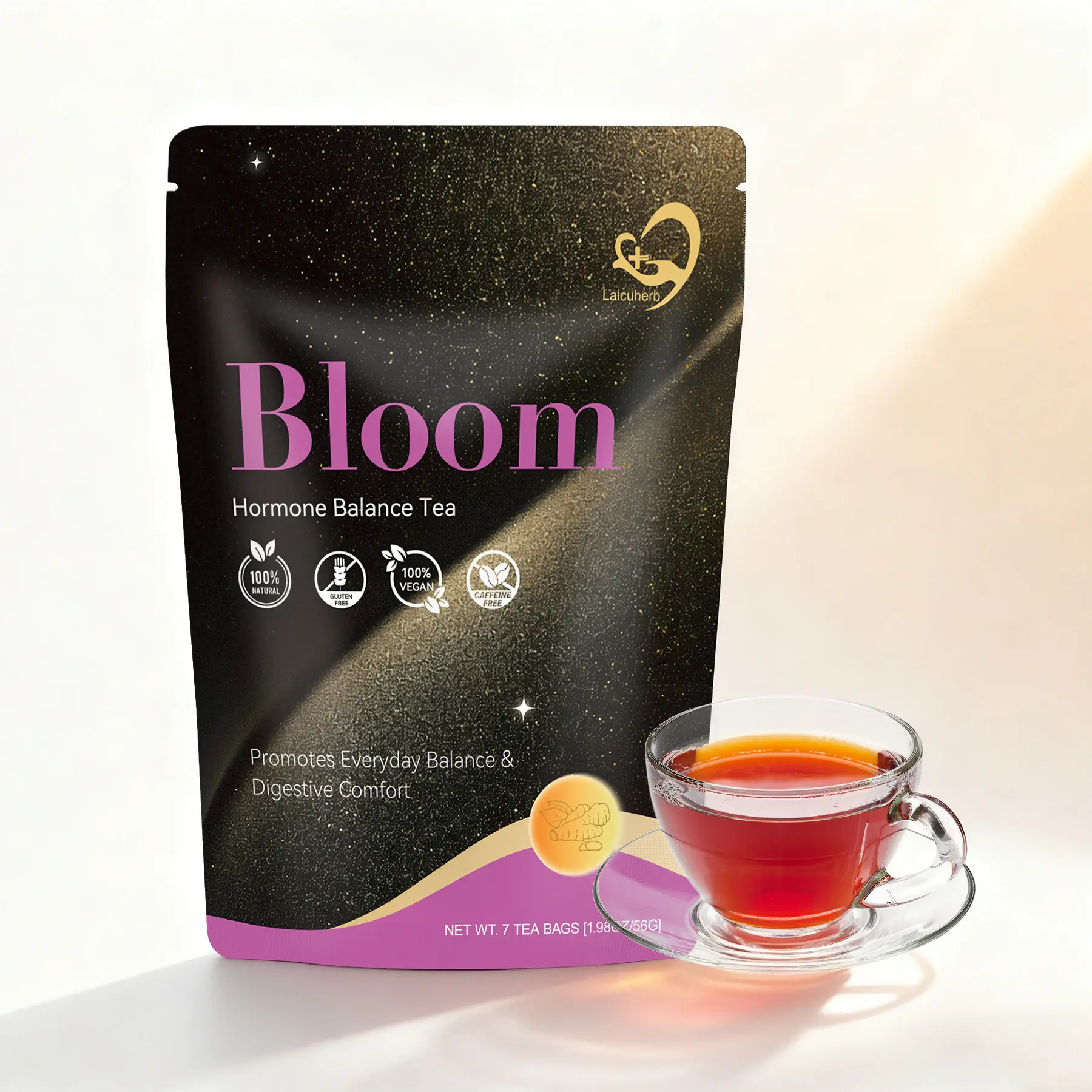
Laicuherb Bloom Hormone Balance Tea
Crafted specifically to support women during their peak ovulatory window. Features cooling honeysuckle, soothing rose, and nourishing goji berries and red dates, produced under FSSC quality standardizations.
Explore Bloom Tea →FAQ
Q1: Can Bloom raise or lower my estrogen or progesterone levels?
No. There is no credible evidence that a brewed herbal tea can reliably raise or lower blood hormone levels. Bloom is a food-grade beverage designed for ritual, not a pharmaceutical designed for modification.
Q2: Will drinking Bloom help with ovulation or fertility?
Bloom is not a fertility aid. It is positioned for the ovulatory window as a comforting drink during a phase of natural change. If you are trying to conceive, you should consult a fertility specialist.
Q3: Should I have my hormones tested before drinking Bloom?
If you have persistent symptoms, testing is always a good idea. Bloom is not a substitute for medical care or testing. Drink it for the ritual and the flavor, and let a professional handle the diagnostics.
Choose Honest Wellness with Laicuherb
Laicuherb merges traditional herbal wisdom with modern food science to create teas that are transparent about their ingredients. Bloom is our starting point: seven traceable botanicals, ISO-FSSC certification, and a clear purpose. Explore the Bloom product page for the full story. For a deeper dive into the science, read our companion article on phytoestrogens in herbal wellness.
Have questions? Write to us at hello@laicuherb.com. We believe honest questions deserve straight answers.
About the Author
Dr. Sarah Jenkins, MD, FACOG
Dr. Sarah Jenkins is a Board-Certified OB/GYN with a specialized focus on women's hormonal health, menstrual cycle harmony, and the integration of holistic botanical approaches to reproductive wellness and mucosal hydration.
Related Readings
- The Best Herbal Tea to Drink During Your Ovulatory Phase Explore Ovulatory Phase Tea →
- A Phase-by-Phase Guide to Buy Cycle Tea Set Read the Cycle Syncing Guide →
- What Makes a Functional Cycle Tea Set Different? Understand Functional Cycle Tea Set →