Hormone Balance Tea While Trying to Conceive: Questions to Ask First






Think about the morning routine you’ve created since you started trying to conceive (TTC): a warm cup, a quiet time, a label that says balance. That label is worth a long read, since the rules change with preconception. Laicuherb, the company behind Bloom hormone balance tea, simplifies the evaluation with an open ingredient list and batch-level credentials such as ISO-FSSC, cGMP, and COA. Before you make a daily cup a habit, there are a few things worth asking yourself: How do you verify each herb? How do you read the whole label? How do you check the tea against your supplements? And which questions do you need to ask your doctor? It’s an easy idea: Keep the relaxing routine, and put safety first.
Quick Answer: Verify Every Herb Before TTC Use
Here is the short version, what most people look for first. In the trying-to-conceive window, you want to scrutinize every herb in every cup before you drink it, recognizing names and new Latin ones. Preconception is a time when the body is preparing for a potential pregnancy, and for most herbs, the database in this window is low. Health officials concur. Prepregnancy counseling should include a discussion of all prescription and nonprescription substances, including herbal supplements that patients may not conceive of as medicines (ACOG Committee Opinion, 2019). The practical guideline for a hormone-balancing tea is simply: examine each mentioned ingredient with a doctor, look for product credentials, and treat the tea as a food-style beverage with no health claims.
Why Preconception Safety Differs from General Wellness
A drink that seems benign during a regular week may carry a different weight during preconception. The body is cycling toward a prospective pregnancy, so a hormone-balancing tea that feels good in the follicular phase can feel different from the same cup in a regular month. The data is also different; most herbal research is in ordinary adults, and the findings don’t immediately apply to a preconception window.
The World Health Organization (WHO) defines preconception care as a continuum that extends until pregnancy, and hence physicians take into consideration your preconception consumption (WHO, 2013). The Mayo Clinic cautions persons of reproductive age to be careful with herbal and nutritional supplements, since they may be used before a pregnancy is known (Mayo Clinic, 2023). There is no current evidence to support any herbal teas affecting these factors, and that is why the safety evaluation comes first.
Confirming the Complete Ingredient Label
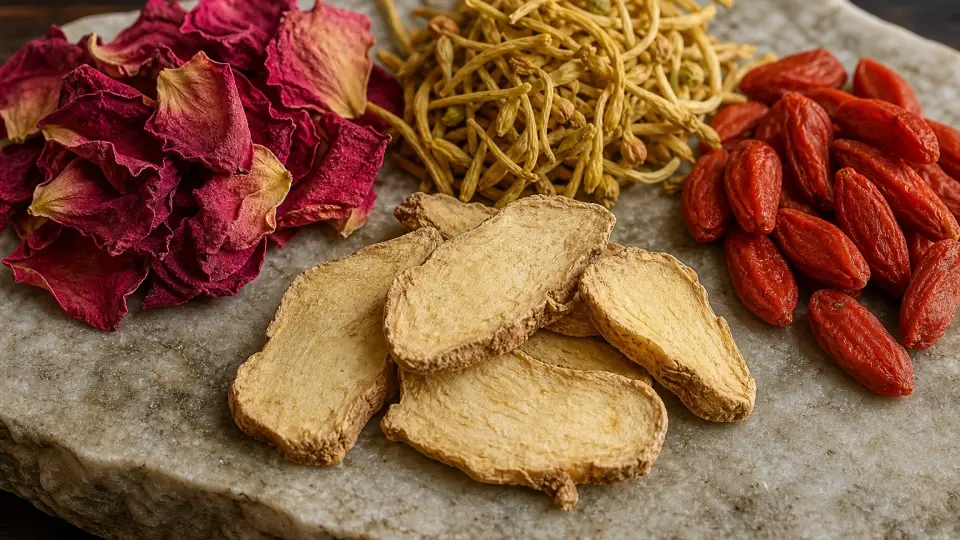
Terms such as "herbal" and "natural" are not very informative about a product. Look at the whole list of ingredients on the label. Laicuherb offers the full recipe for Bloom hormone balance tea on its product site. The blend is made up of Flos Lonicerae (Honeysuckle Flower), Flaccid Aster, Rose, Rhizoma Zingiberis (Ginger), Brown Sugar, Fructus Lycii (Goji Berry), and Fructus Jujubae (Red Date), and is packaged in 8g each bag with seven bags in a pack.
The site provides the certifications behind each batch, including ISO-FSSC, cGMP, and COA, so the supply chain is documented end to end. This is critical, since the term hormone balancing tea is used loosely across the market, and the formula is different from brand to brand. If you don't know what an ingredient is, search its common name before you take your first taste. If a label hides behind a proprietary mix, pump the brakes and ask further questions.
Herbs, Supplements, and Medication Review
Routines get complex when tea is not isolated. Folic acid, prenatal vitamins, and prescription drugs belong on the same list as the tea. Before pregnancy, ACOG advises reviewing all prescription and nonprescription drugs, including supplements and herbal items (ACOG, 2019).
The NIH Office of Dietary Supplements states that the FDA does not monitor supplement safety before release, making label review crucial (NIH ODS, n.d.). Help the physician identify each botanical using your package. Bloom Hormone Balance Tea is marketed as an herbal tea for the ovulatory phase, to be prepared and sipped like any other tea and not applied to the skin or cooked. With a subtle sweetness of red dates and rose with a touch of ginger, the brand provides a comforting frame for any hormone-balancing tea during preconception: a delightful beverage approved by a health professional.
A second pair of eyes on an ingredient list does not have to be complicated. If you are unsure how to describe a herb, or you want the full ingredient and certification details of Laicuherb's hormone balance tea before your next appointment, the team at Laicuherb can point you to the published specifications, certificates, and usage notes. Write to hello@laicuherb.com with your question, and keep the reply in context: the email is for product information, while decisions about what to consume during preconception stay with you and your doctor.
Why Tea Cannot Replace Prenatal Vitamins or Fertility Care
The healthiest habit in this journey is also the most protective: keep the tea in its place. A hormone balance tea is a beverage made from herbs, and nothing in the current evidence suggests that any herbal tea can do the work of prenatal vitamins or fertility care.
The NHS recommends a daily 400 microgram folic acid supplement from the moment you start trying to conceive, backed by strong evidence (NHS, 2023). The U.S. CDC calls folic acid the best tool for preventing neural tube defects, built on decades of population data (CDC, n.d.). No herbal product page makes a comparable claim, and Bloom does not ask to be; its page positions it for the ovulatory period, speaking of feeling balanced, radiant, and at ease. Those are experiences of comfort and daily energy support. Fertility decisions belong with an OB-GYN; vitamins belong on your clinician-approved list.
Questions for an OB-GYN or Pharmacist
You need a short set of questions that turn vague worry into a useful conversation. Start by asking your OB-GYN or pharmacist whether any of the listed botanicals carry a known concern in a preconception window. Then ask whether the tea could interfere with the supplements or medications you already take, including over-the-counter items.
Ask when in your cycle the product is meant to be used, and whether that fits your own cycle, especially if your cycles are irregular. Finally, ask what dose you are actually getting from a brewed cup, because a tea bag is not a standardized tablet and no hormone balance tea should be assumed to deliver a medicinal dose. Bring facts and the meeting goes faster; the Bloom Hormone Balance Tea product page provides the full ingredient list, the 8g per bag specification, and the ISO-FSSC, cGMP, and COA certificates. A clinician who sees each herb by name and each certificate by number can answer more sharply.
When to Stop and Seek Advice
Safety also includes knowing when to put the cup down. Stop drinking any hormone balance tea and contact a clinician if you notice digestive discomfort, an allergic reaction, or anything unusual. Stop if your clinician advises it, and stop the moment you may be pregnant, checking with your care team before any herbal product continues.
An herbal tea should never mask symptoms that deserve medical evaluation, such as severe pain or a suddenly irregular cycle. When the evidence base is thin, caution is the reasonable default. The product is designed for one purpose: brewing as a drink. Laicuherb states its teas are for consumption as beverages; Bloom Hormone Balance Tea should not be applied to the skin, added to cooking, or used otherwise. Keep the ritual simple and your care team in the loop.
Conclusion
Bringing a baby into your life starts with small decisions, and the tea you choose is one. The path in this article is easy to remember: verify every herb, read the full label, review the tea alongside your supplements and medications, and keep the beverage as a comfort ritual while leaving the medical steps to your care team.
Laicuherb's Bloom Hormone Balance Tea fits that role well, with a transparent ingredient list, open certifications, and a formula designed for the ovulatory period. It offers warmth, a gentle floral sweetness, and a moment of calm in a busy cycle. It does not offer a shortcut, and no hormone balance tea should be relied on as one. Take the questions to your doctor, keep the comfort from your cup, and let every decision be one you made with both.
FAQ
Q1. Can I drink hormone balance tea during the two-week wait?
A: The two-week wait is the stretch between ovulation and the day you expect a period or a positive test, a time when people review what they consume. The same rule applies: check the ingredient list with your clinician before you drink, and stop if you may be pregnant. A tea like Bloom Hormone Balance Tea is positioned for the ovulatory period, so if your cycle timing changes, make the cup optional; the plan comes from your clinician. Current evidence does not show that herbal tea affects implantation or early pregnancy, and it should not change your testing plan.
Q2. Could herbal tea affect my pregnancy test results?
A: Home pregnancy tests measure hCG, a hormone produced after implantation, and nothing in the published ingredient list of a typical hormone balance tea, including Bloom's blend of Flos Lonicerae, Rose, Rhizoma Zingiberis, brown sugar, goji berry, and red date, contains hCG or a substance that mimics it. Test timing and test sensitivity cause the most confusing results. Other supplements or medications you take can interfere with some tests, another reason to share your full list with your pharmacist. Follow the test instructions, repeat if unclear, and ask your clinician when in doubt.
Q3. Can I drink herbal tea alongside fertility medications or if my cycles are irregular?
A: Ask this before the first sip: herbs can interact with medications, and no herbal tea should join a medication routine without a pharmacist's review. Irregular cycles deserve the same caution from the other direction: an unpredictable cycle is a reason to see an OB-GYN, since the cause may need evaluation. A hormone balance tea positioned for the ovulatory period, such as Bloom, assumes a cycle that can be tracked, and if your cycle does not cooperate, your clinician should advise on timing or skipping the tea for now.
Start With Safety Education, Then Let Laicuherb Join Your Ritual
Before anything else, finish the safety conversation described in this article. Show your OB-GYN or pharmacist the ingredient list, agree on whether a hormone balance tea fits your preconception routine, then decide which product earns a place in your cupboard.
Then, Laicuherb's Bloom Hormone Balance Tea is a gentle companion for your ovulatory days, a mildly sweet cup of red date and rose with a hint of ginger, backed by ISO-FSSC, cGMP, and COA certificates and an openly published formula. It is brewed like any tea, designed for comfort, warmth, and a calmer rhythm through your cycle. For questions about ingredients or certificates, write to hello@laicuherb.com. The safety education comes first, and the tea comes second, exactly as it should. Explore Bloom hormone balance tea when you are ready, and let the ritual begin with confidence.
About the Author
Dr. Sarah Jenkins, MD, FACOG
Dr. Sarah Jenkins is a Board-Certified OB/GYN with a specialized focus on women's hormonal health, menstrual cycle harmony, preconception guidance (TTC), and the integration of holistic botanical approaches to reproductive wellness and mucosal hydration.
Related Readings
- Feminine Moisture Supplement vs Topical Moisturizer: Oral vs Local Support Read the Oral vs Topical Comfort Guide →
- Experience Holistic Wellness with Laicuherb: Buy Omega-7 Sea Buckthorn Oil Capsules Featuring cGMP Certified Quality Read Sea Buckthorn Oil Capsules Guide →
- What Makes Menstrual Cycle Tea Available Online a Daily Ritual for Women Navigating Four Distinct Hormonal Phases? Read the Cycle Syncing Daily Ritual Guide →