Is Omega-7 Oil the Solution for Dryness? Exploring Science Behind Authentic Organic Himalayan Sea Buckthorn Berry Oil






Published on September 4, 2026 • Verified Botanical Science • 100% Aligned Sourcing
Table of Contents
- 1. Quick Summary →
- 2. Why Tissue Type Determines What the Evidence Can Actually Say →
- 3. Where the Clinical Evidence Is Strongest — Vaginal Mucosa and Dry Eye Syndrome →
- 4. Where Research Is Still Building — Skin Barrier, Digestive Comfort, and Hair →
- 5. What "Organic" and "Authentic" Actually Verify for a Himalayan Sea Buckthorn Oil →
- 6. About Himalayan Sea Buckthorn Oil by Laicuherb →
Quick Summary
Dryness often serves as a blanket label for discomfort across distinct biological systems. However, five distinct tissue types and physiological mechanisms dictate how the body responds to hydration support. While omega-7 palmitoleic acid shows strong clinical backing for certain epithelial layers, evidence for other tissues continues to evolve. Evaluating current research helps consumers differentiate between established clinical findings and emerging hypotheses. Furthermore, understanding what terms like organic and authentic actually verify allows buyers to establish realistic expectations before purchasing cardiovascular/himalayan-sea-buckthorn-oil">Authentic Organic Himalayan Sea Buckthorn Berry Oil.
Why Tissue Type Determines What the Evidence Can Actually Say
People frequently treat dry eyes, vaginal discomfort, parched skin, and gastrointestinal irritation as a single unified condition. In reality, each tissue type relies on distinct structural barriers, fluid secretion mechanisms, and lipid coatings. While omega-7 palmitoleic acid functions as a fundamental structural lipid across all epithelial surfaces, the depth of human research varies significantly depending on the anatomical site. For example, ocular surfaces and vaginal mucosa possess extensive clinical trials testing oral sea buckthorn extracts. Conversely, researchers evaluate dermal barrier repair and gut mucosal integrity through smaller exploratory studies. Categorizing dryness by tissue type prevents generalized overpromises and allows for a rigorous, science-based analysis of omega-7 efficacy.
Where the Clinical Evidence Is Strongest — Vaginal Mucosa and Dry Eye Syndrome
Clinical research demonstrates the highest empirical support for omega-7 in vaginal mucosal health and ocular hydration. A landmark randomized controlled trial published in Maturitas (2014) evaluated postmenopausal women experiencing mucosal thinning and persistent intimate dryness. The trial revealed that daily supplementation with sea buckthorn oil significantly improved mucosal integrity and relieved symptoms compared to placebo. Similarly, a double-blind Finnish study published in 2010 analyzed individuals with dry eye syndrome during cold winter months. Participants taking sea buckthorn berry oil experienced notable reductions in eye redness and burning sensations because the fatty acids stabilized the tear film's outer lipid layer. These specific studies provide solid evidence, though researchers emphasize that trial sizes remain focused on targeted demographic cohorts.
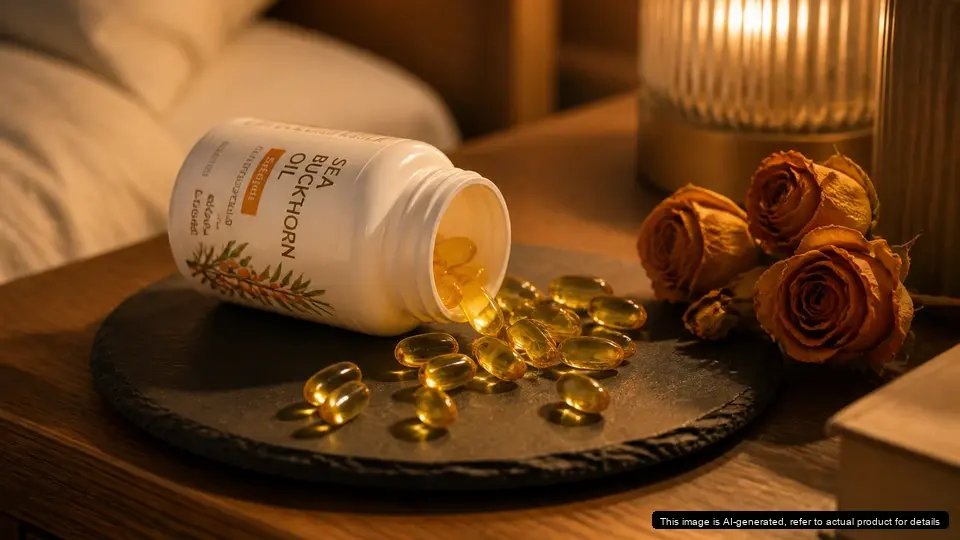
 Oral Omega-7 softgels help stabilize delicate lipid layers across dry ocular and mucosal membranes.
Where Research Is Still Building — Skin Barrier, Digestive Comfort, and Hair
Beyond ocular and intimate mucosa, scientists continue to investigate how omega-7 influences the epidermal moisture barrier, digestive lining, and hair shaft resilience. Dermal lipids rely heavily on palmitoleic acid to synthesize protective sebum, which seals moisture inside the stratum corneum. Small-scale human trials indicate that oral supplementation increases skin elasticity and reduces transepidermal water loss (TEWL) after four to eight weeks. Similarly, preclinical models suggest that omega-7 helps reinforce the protective mucus layer within the stomach and intestinal tract. However, clinical validation in large-scale human populations for gastrointestinal and hair health remains in developing stages. Recognizing that mechanistic plausibility differs from definitive clinical proof helps consumers evaluate product claims with objective clarity.

Wild organic Himalayan sea buckthorn berries harvested at high altitudes are processed via supercritical carbon dioxide extraction.What "Organic" and "Authentic" Actually Verify for a Himalayan Sea Buckthorn Oil
Marketing terms like organic and authentic often create confusion if buyers do not understand their exact regulatory scopes. An official USDA Organic certification verifies strictly agricultural parameters. It proves that farmers cultivated the sea buckthorn berries without synthetic pesticides, chemical fertilizers, or genetic modification. Meanwhile, the term authentic refers to geographical origin, botanical species verification, and supply chain traceability, typically confirmed through an official Certificate of Inspection. However, neither organic nor authentic status guarantees a specific clinical potency on its own. Potency depends on whether the manufacturer utilizes whole-berry extracts, high-altitude wild harvesting, and gentle supercritical carbon dioxide extraction methods. Consumers should treat these certifications as essential baseline indicators of safety rather than direct statements of therapeutic strength.
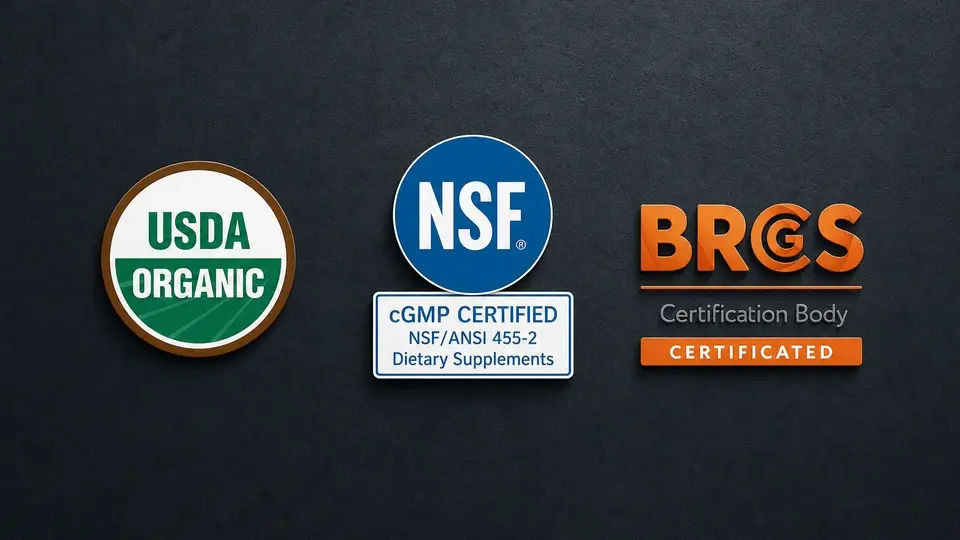
Himalayan Sea Buckthorn Oil processed under complete safety compliance with BRCGS and NSF cGMP global certifications.About Himalayan Sea Buckthorn Oil by Laicuherb
To bridge the gap between rigorous sourcing standards and verified biochemical potency, Laicuherb maintains complete vertical control over its production pipeline. The enterprise wild-crafts organic sea buckthorn berries in the unpolluted, high-altitude Himalayan region above 12,000 feet. These extreme environmental conditions stimulate the plant to synthesize exceptionally high concentrations of protective palmitoleic acid. By managing processing from pristine field harvests to final encapsulation, Laicuherb eliminates third-party contamination risks and secures uniform batch purity.
The finished formula contains 30 vegan softgels, delivering 1,000 milligrams of whole-berry extract per two-softgel serving. This daily intake provides 324 milligrams of pure omega-7 alongside balanced levels of omega-3, omega-6, and omega-9 fats. Additionally, the manufacturing facility holds complete compliance certifications under NSF cGMP, BRCGS, and USDA Organic guidelines. To explore the broader biological mechanisms governing these fatty acids, readers can examine The Reason Your Body Needs the Nutrients Found in Himalayan Sea Buckthorn Oil on the company's educational platform. Through total supply chain transparency, Laicuherb offers a reliable foundation for holistic, tissue-specific hydration management.
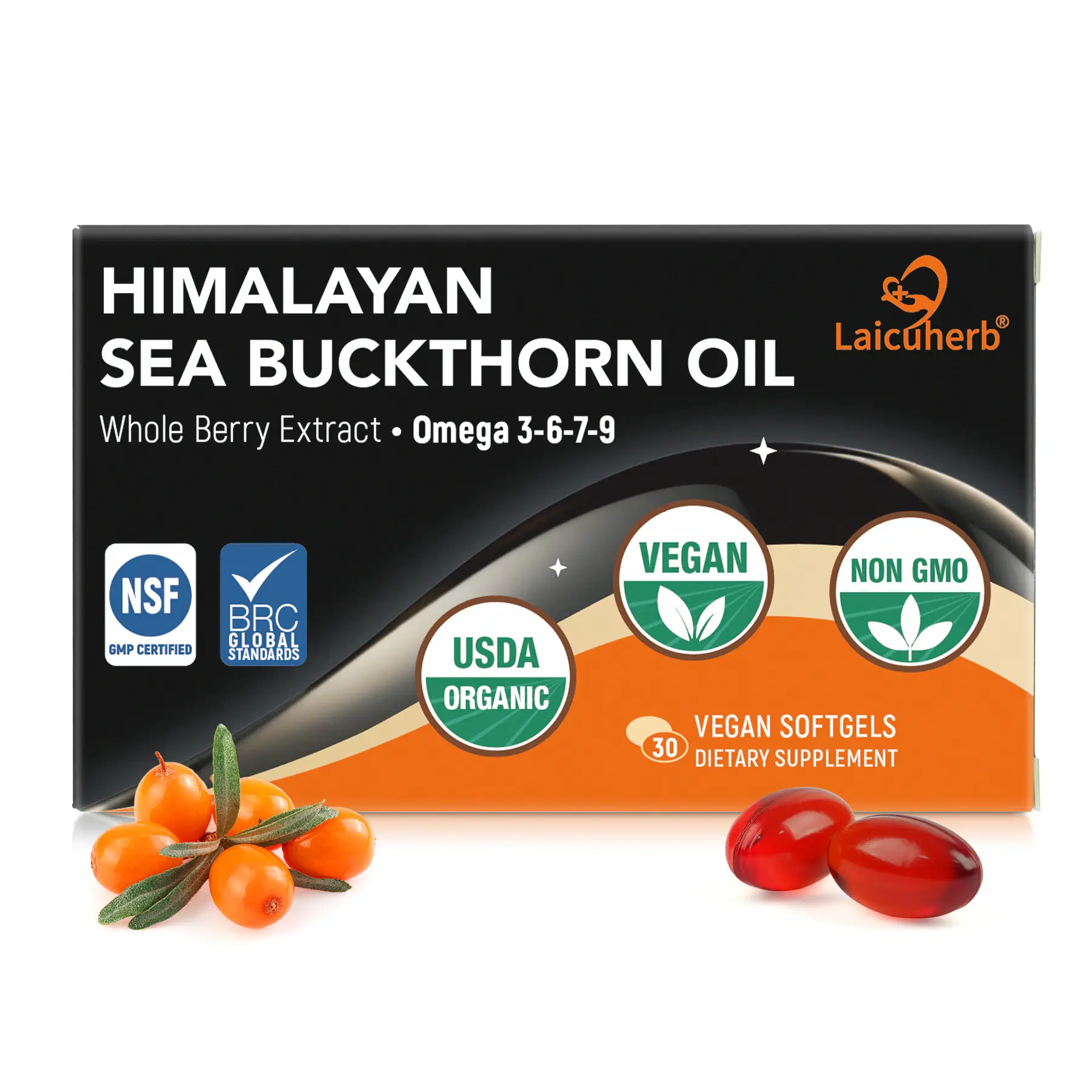
Himalayan Sea Buckthorn Oil Softgels
100% whole-berry supercritical CO2 extract harvested from altitudes above 12,000 feet. Features 324 mg of pure, clinically studied active Omega-7 per serving to provide deep biological hydration for vaginal mucosa, eyes, and skin.
• Certifications: USDA Organic, NSF cGMP & BRCGS Certified
• Packaging: 30 Vegan Softgels / Uniform Batch Purity
LAICUHERB SCIENTIFIC SUMMARY
"Epithelial membranes require structural lipids to function. Aligning wild-harvested Himalayan purity with precise extraction parameters delivers the standardized palmitoleic acid concentration required to support tissue hydration from the inside out."
About the Author

Dr. Sarah Jenkins, MD, FACOG
Dr. Sarah Jenkins is a Board-Certified OB/GYN with a specialized focus on women's hormonal health, menstrual cycle harmony, and the integration of holistic botanical approaches to reproductive wellness and mucosal hydration.
Frequently Asked Questions
What tissues does Omega-7 support most effectively?
Current clinical literature shows the strongest support for vaginal mucosa and ocular surfaces, where oral omega-7 stabilizes delicate lipid layers. Skin barrier support also shows solid secondary evidence, while digestive and hair benefits remain active areas of ongoing research.
Is there a difference between sea buckthorn berry oil and sea buckthorn seed oil for dryness?
Yes. Seed oil contains high levels of omega-3 and omega-6 fatty acids, whereas berry pulp oil concentrates palmitoleic acid (omega-7). Whole-berry extracts combine both, providing the highest concentration of omega-7 necessary for mucosal and skin hydration.
What does USDA Organic certification verify for a sea buckthorn supplement?
USDA Organic certification confirms that the raw berries grew without synthetic pesticides, toxic chemical fertilizers, or genetic modification. It verifies agricultural purity and environmental safety, though it does not measure final active fatty acid percentages.
How long before Omega-7 supplementation affects dry eye symptoms?
Clinical studies measure noticeable improvements in tear film stability and ocular comfort after four to eight weeks of consistent daily usage. Because fatty acids integrate gradually into cellular membranes, immediate short-term results should not be expected.
Can Omega-7 and Omega-3 be taken together?
Yes. Omega-3 and omega-7 operate through entirely different physiological pathways. While omega-3 modulates inflammatory signaling, omega-7 serves as a structural building block for mucosal membranes, making their combined intake complementary.
What is the difference between COI and COA documentation?
A Certificate of Inspection (COI) verifies official trade compliance, organic status, and geographical origin. A Certificate of Analysis (COA) provides specific laboratory testing results proving that a specific product batch is free from heavy metals, microbes, and chemical contaminants.