Oral vs. Topical: What’s the Right Way to Use Sea Buckthorn Oil?






Should you take sea buckthorn oil orally or apply it topically? This guide breaks down the real benefits of both forms — from skin barrier repair and anti-aging support to gut health and women’s wellness — so you can choose the right way to use sea buckthorn oil based on your goals.
Oral vs. Topical: Which Is the Correct Way to Use Sea Buckthorn Oil?
If you’ve been exploring natural supplements or clean beauty products lately, chances are you’ve already come across sea buckthorn oil.
It’s everywhere right now:
- Clean skincare brands
- Wellness podcasts
- Anti-inflammatory diet discussions
- Functional medicine blogs
- Women’s health supplements
- TikTok skincare routines
But one question keeps coming up:
Should sea buckthorn oil be taken orally or used topically?
Most people assume it’s just another facial oil because of its rich orange color and strong reputation for skin repair.
But in the U.S. market today, sea buckthorn oil has actually evolved into two very different product categories:
- Oral sea buckthorn supplements
- Topical sea buckthorn skincare oils
And surprisingly, they’re often formulated for completely different purposes.
That’s also where many consumers get confused.
Why Is Sea Buckthorn Oil Used Both Internally and Externally?
The answer comes down to the nutritional profile of the berry itself.
Sea buckthorn is naturally rich in:
- Omega-3
- Omega-6
- Omega-7
- Omega-9
- Vitamin E
- Carotenoids
- Plant sterols
- Antioxidant polyphenols
The standout nutrient here is Omega-7 (palmitoleic acid) — a relatively rare fatty acid that has gained attention for its connection to:
- Skin barrier support
- Moisture retention
- Mucosal health
- Dryness-related concerns
That’s why sea buckthorn oil has developed a unique reputation as both:
- an “inside-out” wellness supplement
- and a skin-repairing topical oil
So the real question isn’t:
“Which method is correct?”
It’s:
“What are you actually trying to improve?”
1. Oral Sea Buckthorn Oil: Better for Long-Term Internal Support
Why Americans Are Increasingly Taking Sea Buckthorn Oil Supplements
Over the last few years, the U.S. wellness industry has shifted heavily toward:
- gut health
- inflammation support
- healthy aging
- hormone balance
- skin-from-within nutrition
Sea buckthorn oil fits naturally into that movement.
In particular, women over 40 are increasingly using it as a daily wellness supplement for:
- dry skin support
- menopause-related dryness
- mucosal hydration
- antioxidant support
The Most Common Benefits of Oral Sea Buckthorn Oil
1. Skin Dryness and Barrier Support
This is probably the most marketed benefit in the American supplement space.
A lot of consumers eventually realize something important:
Skin health isn’t only about what you put on your face.
Fatty acid intake can influence the skin barrier from within.
Many long-term users describe the effects of oral sea buckthorn oil in a very specific way:
“My skin didn’t suddenly become perfect — it just stopped feeling constantly dry and irritated.”
That distinction matters.
Sea buckthorn oil is usually less about dramatic overnight beauty results and more about:
- supporting moisture retention
- reducing tightness
- helping stressed skin feel more resilient
- supporting the lipid barrier over time
That’s why many functional wellness practitioners refer to it as:
“An inside-out skin supplement.”
2. Women’s Wellness and Dryness Support
This is one of the biggest reasons Americans buy sea buckthorn oil — although it’s rarely discussed openly in Asian beauty content.
Many women use oral sea buckthorn oil to support:
- dry eyes
- dry mouth
- intimate dryness
- menopause-related discomfort
Because Omega-7 is closely associated with mucosal tissue support, sea buckthorn supplements are often positioned in the U.S. market under categories like:
women’s wellness, menopause support, intimate hydration, healthy aging.
3. Gut and Digestive Support
Some consumers also take sea buckthorn oil as part of a broader anti-inflammatory lifestyle.
It’s commonly associated with:
- digestive comfort
- stomach lining support
- gut wellness routines
Especially among people dealing with:
- high stress
- heavy coffee consumption
- spicy diets
- irregular eating habits
Of course, it’s not a medication.
But in the natural wellness world, it’s often viewed as a long-term nutritional support ingredient rather than a quick fix.

The Downsides of Oral Sea Buckthorn Oil
This is the part many brands don’t emphasize enough.
1. The Taste Can Be Intense
Liquid sea buckthorn oil often tastes:
- sour
- earthy
- slightly bitter
- oily at the same time
Some first-time users describe it as:
“A mix of citrus, herbs, and fish oil.”
That’s one reason softgels and capsules have become far more popular in the U.S.
2. Results Usually Take Time
If you expect:
- overnight glow
- instant skin repair
- dramatic changes within days
you’ll probably be disappointed.
Sea buckthorn oil works more like a long-term nutritional strategy.
Many users report noticeable changes only after:
- 4 weeks
- 8 weeks
- or longer
Consistency matters more than speed.
2. Topical Sea Buckthorn Oil: More Focused on Skin Repair
Compared to oral supplements, topical sea buckthorn oil is already well established in the skincare industry.
Especially in:
- clean beauty
- barrier repair skincare
- natural anti-aging products
The Most Popular Uses for Topical Sea Buckthorn Oil
1. Dryness and Damaged Skin Barrier
This is probably the most common use.
People often reach for sea buckthorn oil after:
- over-exfoliating
- using strong acids
- damaging the skin barrier
- experiencing seasonal dryness
Many users describe it as:
“More restorative than a typical facial oil.”
That’s because it doesn’t just seal moisture in.
It also contains naturally occurring carotenoids and fatty acids that help support stressed skin.
2. After-Sun Recovery
Many American natural skincare brands include sea buckthorn oil in:
- after-sun balms
- calming serums
- recovery oils
Its high carotenoid content gives it strong antioxidant appeal.
Users often report that post-sun skin feels:
- calmer
- less tight
- less irritated
after using products containing sea buckthorn oil.
3. Mature Skin and Anti-Aging Support
Sea buckthorn oil tends to work especially well for:
- dry skin
- mature skin
- winter skincare routines
Unlike lightweight oils, it feels richer and more nourishing.
That’s why it’s commonly used in:
- nighttime repair products
- barrier creams
- anti-aging facial oils
The Biggest Misconception About Topical Sea Buckthorn Oil
“Natural oils are always gentle.”
Not necessarily.
High-concentration sea buckthorn oil can actually be tricky for some skin types.
1. It Can Stain Everything
This surprises almost everyone the first time.
Sea buckthorn oil is intensely orange.
That means it can stain:
- pillowcases
- towels
- fingertips
- even the skin temporarily
Many users learn quickly that a little goes a long way.
2. It’s Not Ideal for Every Skin Type
Especially for:
- oily skin
- acne-prone skin
- congestion-prone skin
Heavy application can sometimes feel:
- greasy
- suffocating
- too rich
That’s why many American skincare brands formulate sea buckthorn oil at lower concentrations instead of using it straight.
The Important Difference Most Consumers Don’t Know: Berry Oil vs. Seed Oil
This is one of the most overlooked details.
Sea buckthorn oil can actually come from two different parts of the plant:
| Type | Source | Main Characteristics |
|---|---|---|
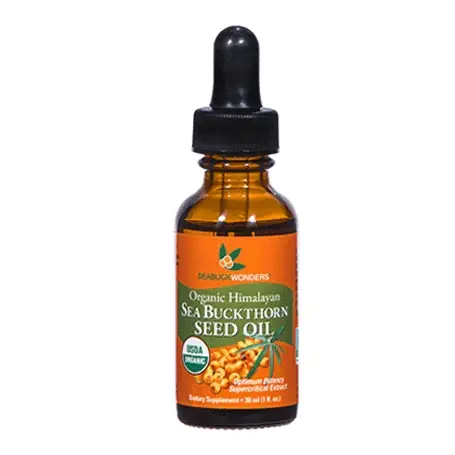
| Sea Buckthorn Berry Oil | Fruit pulp | Higher in Omega-7, deep orange color |
| Sea Buckthorn Seed Oil | Seeds | Higher in Omega-3, lighter texture |
In the U.S. Market:
Topical skincare products
often favor berry oil because it’s:
- richer
- more reparative
- higher in carotenoids
- visually associated with “active” skincare
Oral supplements
often combine both oils to create a broader fatty acid profile.
So Which One Should You Choose?
The answer depends entirely on your goal.
| Your Goal | Better Option |
|---|---|
| Skin barrier repair | Topical |
| Long-term dryness support | Oral |
| After-sun recovery | Topical |
| Menopause-related dryness | Oral |
| Sensitive or compromised skin | Topical |
| Daily antioxidant support | Either or both |
What Many American Consumers Eventually End Up Doing
Not choosing one over the other.
But combining both.
Because:
- topical use supports the skin surface
- oral supplementation supports the body internally
The two approaches don’t compete with each other.
In fact, many premium wellness brands now sell:
- sea buckthorn capsules
- sea buckthorn facial oils
as complementary products.
My Perspective: Sea Buckthorn Oil Isn’t Magic — But It Does Have a Real Place
I think one of the biggest misconceptions around sea buckthorn oil is that people expect it to behave like a miracle beauty product.
It’s usually not dramatic.
It’s more about:
- long-term support
- gradual improvement
- strengthening resilience over time
And another common misunderstanding is this:
“Natural automatically means universally gentle.”
That’s not always true.
Highly concentrated botanical oils can still overwhelm certain skin types, especially acne-prone or reactive skin.
Like most wellness ingredients, sea buckthorn oil works best when used intentionally — not excessively.
FAQ
Yes. Many people use oral supplements alongside topical skincare products to support both internal wellness and external skin health.
Is sea buckthorn oil better for dry skin or oily skin?It’s generally better suited for dry, mature, or sensitive skin. Oily or acne-prone skin types may find high concentrations too heavy.
How long does oral sea buckthorn oil take to work?Most people report noticeable changes after several weeks of consistent use rather than immediately.
Why is sea buckthorn oil orange?Its bright orange color comes from naturally occurring carotenoids, which are also responsible for many of its antioxidant properties.
Can sea buckthorn oil clog pores?It can feel heavy on some skin types, especially in high concentrations. Patch testing is recommended for acne-prone users.
Final Thoughts
When it comes to sea buckthorn oil, the real answer isn’t:
“Oral or topical — which one is correct?”
It’s:
“What kind of support are you looking for?”
If your focus is:
- skin repair
- barrier recovery
- after-sun care
topical use makes more sense.
But if you’re interested in:
- long-term dryness support
- women’s wellness
- internal nourishment
- healthy aging
oral supplementation may be the better fit.
And increasingly, American consumers are beginning to view sea buckthorn oil not just as another skincare trend — but as a multifunctional wellness ingredient that works both inside and out.
References
- - Sea Buckthorn Oil: Composition and Benefits in Skin Health Research
- - Journal of Nutritional Biochemistry – Omega Fatty Acids and Skin Barrier Function
- - International Journal of Molecular Sciences – Bioactive Compounds in Sea Buckthorn
- - Research on Palmitoleic Acid (Omega-7) and Mucosal Health
- - Botanical Applications of Hippophae rhamnoides in Nutraceuticals and Cosmetics
About the Author

Laicuherb
The core content team at Laicuherb is a collective of experts, including health professionals, consultants in Traditional Chinese Medicine, and experienced content strategists. Some articles are authored by our brand's founders or R&D scientists. Laicuherb team has deep expertise in herbal health, integrating the wisdom of traditional medicine, modern nutrition, and women's health research to transform ancient wellness principles into practical, accessible content for everyday life.
© 2026 Laicuherb. Your State Your Tea.