Period Tea and Heating Pads: Designing a Layered Comfort Routine






Written & Reviewed by: Dr. Sarah Jenkins, MD, FACOG | September 16, 2026
Overview
Period cramps often send people toward two familiar comforts: a heating pad across the lower abdomen and a warm drink within reach. They can share an evening, but they do not do the same job. External heat provides local warmth. Period tea provides a drink, fluid, flavor, and a deliberate pause.
This guide does not replace professional medical advice. When pain is severe, unusual, or worsening, contact a qualified healthcare professional.
Contents
- → Quick Answer: A Layered Routine Assigns Different Jobs
- → What Existing Cramp-Relief Advice Already Covers
- → Step 1 — Warmth, Hydration, or Medical Evaluation?
- → Step 2 — Time External Heat Safely
- → Step 3 — Add Period Tea as a Hydration and Pause Ritual
- → Three Sample Routines: Home, Work, Bedtime
- → When a Comfort Routine Is Not Enough
- → About Laicuherb Ease Period Comfort Tea
- → FAQ
Quick Answer: A Layered Routine Assigns Different Jobs to Tea and Heat
A layered routine works by assigning each tool one clear job. A heating pad or covered hot-water bottle provides external warmth to the lower abdomen or back. A cup of period tea adds fluid, warmth in the hands, taste, and a short pause.
Heat therapy has been studied for primary dysmenorrhea [1][2]. Those studies concern heat applied to the body. They do not show that drinking herbal tea has the same effect, and they do not establish Ease Period Comfort Tea as a pain treatment. The important boundary is simple: tea stays a drink, heat stays external.
What the Existing Cramp-Relief Advice Already Covers
Most cramp-relief guidance already mentions external heat, over-the-counter pain relievers, rest, gentle movement, and clinical assessment when symptoms do not fit ordinary primary dysmenorrhea. ACOG lists a heating pad or hot-water bottle as a comfort option for painful periods [3].
Ease Period Comfort Tea is one drinkable option for the pause-and-fluid layer. The supplied product information describes it as a menstrual-phase health tea with ISO-FSSC, COI, and COA documentation. Those documents concern product or manufacturing information; they do not prove pain relief or individual suitability.
Step 1 — Decide Whether You Need Warmth, Hydration, or Medical Evaluation
Start by naming the problem in front of you. If your lower abdomen or back feels tight and a warm external layer is soothing, heat may be reasonable. If you feel tired, chilled, or ready for a pause, a drink may make the routine easier to follow.
Seek medical evaluation for:
- Sudden, unusually intense, worsening, or disabling pain
- Very heavy bleeding, fainting, or fever
- Pain outside your usual period pattern, or pain with pregnancy possibility
- Bleeding after sex, new pelvic pain, or other unusual symptoms
A tea and a heating pad are not a substitute for medical evaluation. Ease Period Comfort Tea is made for brewing and drinking only. Do not apply the bag to your skin or use it as an external treatment.
Step 2 — Time External Heat Safely
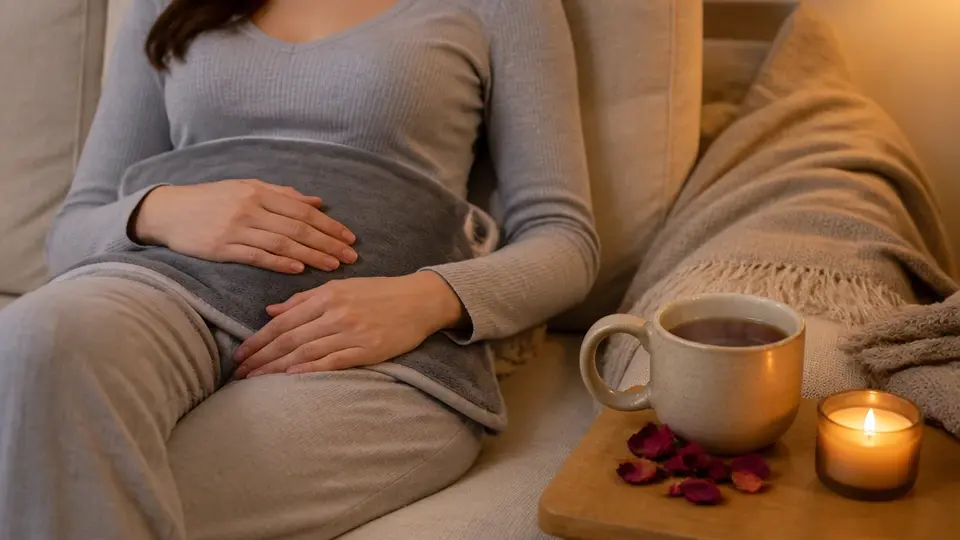
Use a heating pad intended for body use or a hot-water bottle with a cover. Choose a comfortable low or moderate setting and place a layer of fabric between the device and your skin. Check the skin after a short session. Stop if you feel burning, excessive heat, numbness, or pain.
Do not fall asleep on an electric heating pad. Avoid heat on broken or inflamed skin and use extra caution if you have reduced sensation, poor circulation, or another condition that makes heat harder to judge.
The safest duration depends on the device instructions, temperature, skin sensitivity, and whether you remain awake. Some consumer guidance uses short sessions of around 15 to 20 minutes, but the product instructions should control. The tea does not change those heat rules.
Step 3 — Add Period Tea as a Hydration and Pause Ritual
Steep one 8 g bag of Ease Period Comfort Tea in hot water according to product instructions, then drink it slowly. The ingredient list includes longan, red dates, wolfberry, angelica, dried ginger, Pingyin roses, and peony petals.
The practical job of the cup is modest: fluid, flavor, warmth in the hands, and a reason to pause. Current evidence does not establish that this finished tea treats menstrual pain, reduces prostaglandins, or works like a heating pad or pain reliever.
You can drink it before heat, during a short session, or afterward. For product questions, contact Laicuherb at hello@laicuherb.com.
Three Sample Routines for Home, Work, and Bedtime
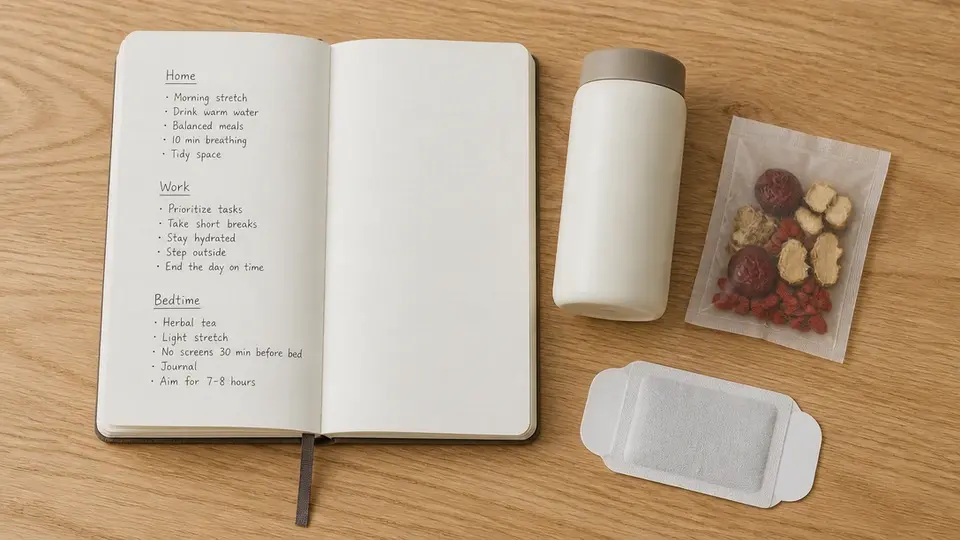
At Home
Sit on a sofa, place a covered heating pad on a low or moderate setting over clothing or a fabric barrier, and brew one bag of Ease Period Comfort Tea. Drink it while remaining awake, then remove the heat and check your skin.
At Work
A heating pad may not be practical. A thermos of Ease Period Comfort Tea can provide the drink-and-pause layer during a break. If a wearable heat product is permitted, follow its instructions and keep the temperature comfortable.
At Bedtime
Drink the tea earlier in the evening if it helps you settle into a routine. Use external heat for a limited, awake session before sleep, then remove the pad. Never sleep on an electric heating pad.
When a Comfort Routine Is Not Enough
A comfort routine is not enough when:
- Pain worsens over several cycles or requires increasing pain medicine
- Pain causes repeated missed school, work, or daily activities
- Fever, fainting, or very heavy bleeding
- Pain during or after sex, or pain outside your usual period pattern
- New pelvic pain, unusual discharge, or bleeding between periods
- Pain with pregnancy possibility
Primary dysmenorrhea is common, but secondary causes such as endometriosis, adenomyosis, pelvic infection, or other gynecologic conditions can require assessment and treatment [4][5][6]. Heat and tea may continue as lifestyle comfort after you have a care plan. They should not delay that plan.
If you are pregnant, trying to conceive, breastfeeding, taking prescription medicines, or managing a health condition, ask a healthcare professional before adding a new herbal drink.
Conclusion
A layered comfort routine works best when the layers stay separate. Heat is external, time-limited, and subject to skin-safety rules. Laicuherb Ease Period Comfort Tea is a brewed drink for fluid, flavor, and a short pause. It is not a pain medicine and it does not make heat therapy stronger.
Start by deciding whether you need warmth, a drink, or medical evaluation. Use the heating pad while awake and within the device instructions. Brew the tea only for drinking. If pain is severe, unusual, worsening, or disabling, seek care instead of adding more comfort layers.
About Laicuherb Ease Period Comfort Tea
Ease Period Comfort Tea
Ease is described as a caffeine-free herbal blend for the menstrual phase, containing longan, red dates, wolfberry, angelica, dried ginger, Pingyin flowers (roses), and peony petals. Each bag is 8 g, with seven bags per box. It is part of the Laicuherb Cycle Tea Set.
For product questions, ingredient details, or documentation, contact Laicuherb at hello@laicuherb.com or visit www.laicuherb.com.
Frequently Asked Questions
In what sequence should I use heat and period tea?
There is no required order. You can drink Ease Period Comfort Tea before a short heat session, sip it while sitting upright and awake, or have it afterward. Sequence is a lifestyle choice, not a medical protocol. Heat should remain within the device instructions, and the tea should remain a brewed drink.
How long should each layer last, and how do I protect my skin?
Follow the heating pad or hot-water bottle instructions, use a fabric barrier, choose a comfortable setting, and remain awake. Short sessions of around 15 to 20 minutes are commonly used in consumer guidance, but the device directions and your skin response matter more than a fixed number. Check the skin when you remove the heat.
Can I drink period tea if I already take menstrual pain medication?
This article does not treat period tea as a substitute for medication recommended by a healthcare professional. Keep your medication plan as directed. Ask a pharmacist or clinician before adding a new herbal drink if you take regular medication, are pregnant, trying to conceive, breastfeeding, or have a condition that affects what you can safely use.
References
[1] Akin MD et al. (2001). Continuous low-level topical heat in the treatment of dysmenorrhea. Obstet Gynecol, 97(3), 343–349.
[2] Jo J & Lee SH. (2018). Heat therapy for primary dysmenorrhea: A systematic review. Sci Rep, 8, 16252.
[3] American College of Obstetricians and Gynecologists. Dysmenorrhea: Painful periods. ACOG patient guidance.
[4] Proctor M & Farquhar C. (2006). Diagnosis and management of dysmenorrhoea. BMJ, 332(7550), 1134–1138.
[5] Burnett M & Lemyre M. (2017). Primary dysmenorrhea consensus guideline. J Obstet Gynaecol Can, 39(7), 585–595.
[6] Dawood MY. (2006). Primary dysmenorrhea: Advances in pathogenesis and management. Obstet Gynecol, 108(2), 428–441.