Sea Buckthorn Oil: Seed Oil vs. Fruit Oil






Table of Contents
But recently, a third type has emerged: whole-sea buckthorn oil (extracted from the entire berry, including pulp, peel, and seed). Is it just a marketing hybrid, or does it truly combine the best of both worlds?
In this article, we’ll break down:
- Key differences between fruit oil and seed oil (with scientific references).
- Symptom-based guidance – which oil for which condition.
- Whether whole-fruit oil can genuinely benefit both skin and cardiovascular health at the same time.
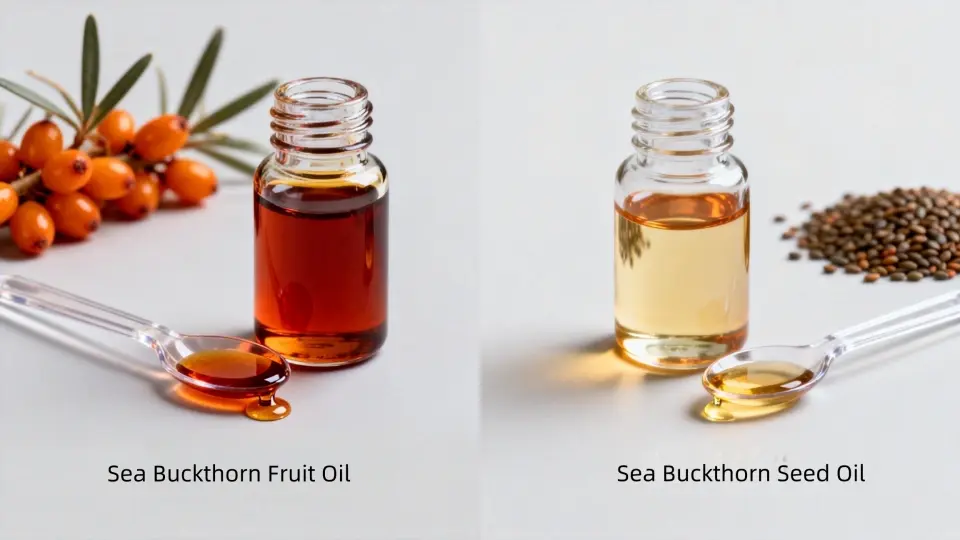
Sea Buckthorn Fruit Oil vs. Seed Oil – What’s the Difference?
Although both oils come from Hippophae rhamnoides L., their chemical profiles differ significantly because they are extracted from different parts of the berry.
| Feature | Fruit Oil (Pulp/Peel) | Seed Oil |
|---|---|---|
| Source | Fleshy part of the berry | Inner seed (kernel) |
| Color | Deep reddish‑orange (due to carotenoids) | Pale yellow to amber |
| Scent | Strong, fruity, characteristic | Mild, almost neutral |
| Primary fatty acids | Palmitic acid (saturated, ~32%) Palmitoleic acid (Omega‑7, ~30‑35%) |
Linoleic acid (Omega‑6, ~35‑40%) α‑Linolenic acid (Omega‑3, ~25‑30%) |
| Major bioactive compounds | Carotenoids (β‑carotene, lycopene), vitamin C, flavonoids, organic acids | Vitamin E (tocopherols), phytosterols, higher total unsaturated fats |
| Typical use | Digestive support, skin brightening, immune boosting | Cardiovascular health, anti‑inflammation, deep skin repair |
Key scientific references:
- Fatty acid composition: According to a 2019 study in the Journal of Food Science and Technology, sea buckthorn seed oil contains over 85% unsaturated fatty acids, while fruit oil is richer in monounsaturated palmitoleic acid (Omega‑7) and saturated fats.1
- Carotenoid content: Fruit oil has 10‑50 times more carotenoids than seed oil, which explains its deep red color and strong antioxidant potential.2
Symptom‑Based Guide – Fruit Oil or Seed Oil?
Below is a quick, evidence‑inspired guide for common health concerns. (Remember: oils are dietary supplements, not medical treatments.)
| If your main issue is… | Prefer Fruit Oil | Prefer Seed Oil |
|---|---|---|
| Constipation | ✅ (lubricates the bowel) | ❌ |
| Heartburn / mild gastritis | ❌ (can increase acid) | ✅ (anti‑inflammatory to mucosa) |
| Gastric / duodenal ulcer | ❌ | ✅ (promotes tissue regeneration) |
| High cholesterol / triglycerides | ⚠️ (some benefit, but less effective) | ✅ (Omega‑3/6 lower LDL) |
| Hypertension | ⚠️ | ✅ (improves endothelial function) |
| Dry, sensitive, or acne‑prone skin (topical) | ❌ (may stain, heavier) | ✅ (light, absorbs well, non‑comedogenic) |
| Hyperpigmentation / sun damage | ✅ (carotenoids + vitamin C) | ❌ |
| Burns, wounds, scars (topical) | ❌ | ✅ (high linoleic acid aids regeneration) |
| Low immunity / frequent colds | ✅ (vitamin C & flavonoids) | ❌ |
| Chronic systemic inflammation | ❌ | ✅ (Omega‑3 dominates) |
Can Whole‑Fruit Sea Buckthorn Oil Benefit Both Skin and Cardiovascular Health?
With the advancement of technology, people have attempted to extract the whole fruit of sea buckthorn oil through the supercritical carbon dioxide extraction method. This method combines the characteristics of sea buckthorn fruit oil and sea buckthorn seed oil, and it is beneficial for both skin and cardiovascular health.
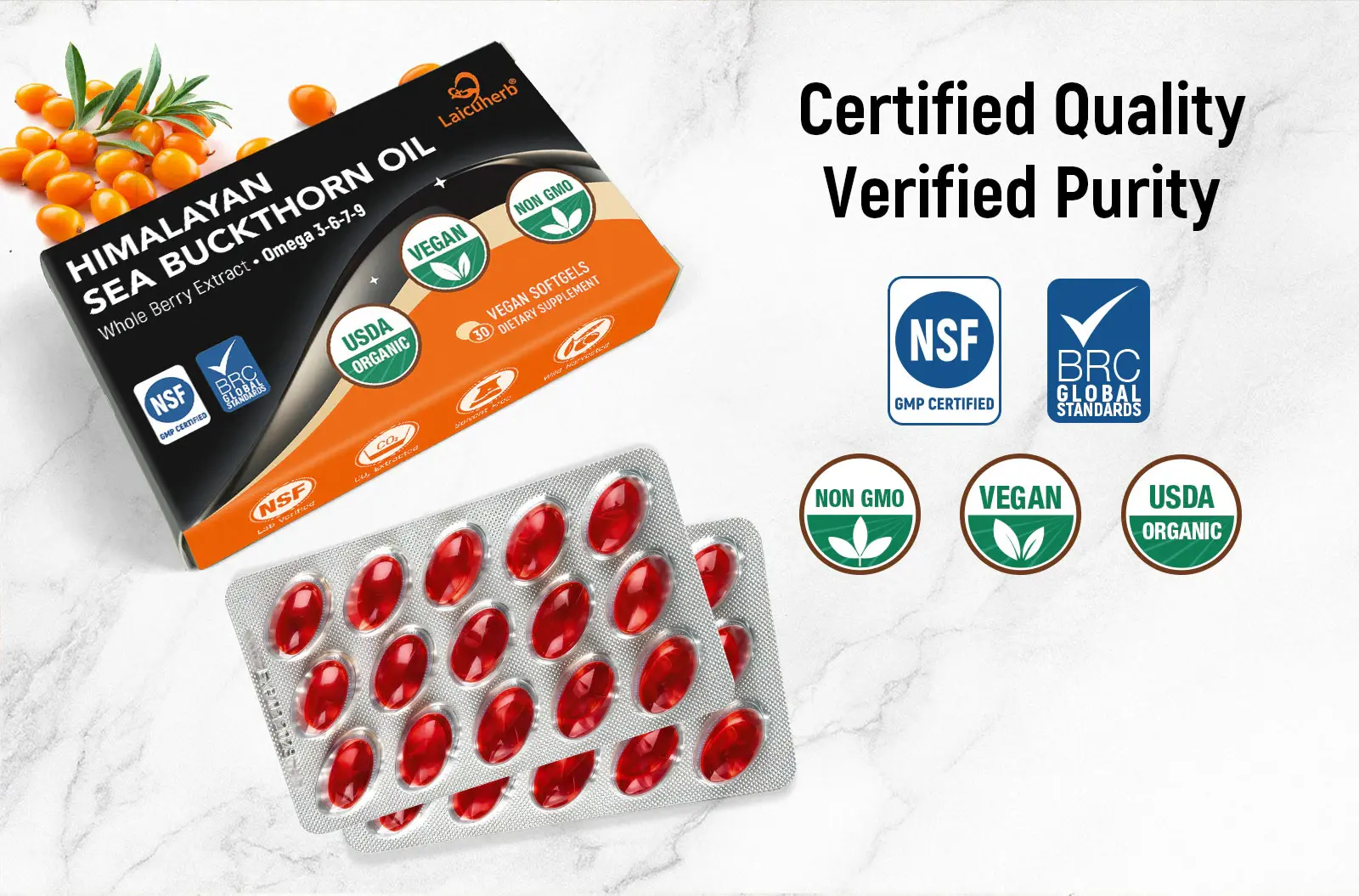
Whole‑fruit sea buckthorn oil is produced by pressing the entire berry (peel, pulp, and seed) without separating the components. The resulting oil contains:
- Palmitoleic acid (Omega‑7) from the fruit pulp – supports skin hydration, mucous membranes, and lipid metabolism.
- Linoleic acid (Omega‑6) & α‑Linolenic acid (Omega‑3) from the seeds – support anti‑inflammatory pathways and cardiovascular function.
- Carotenoids & vitamin C from the peel – powerful antioxidants that protect skin from UV damage and support immune health.
- Tocopherols (vitamin E) from seeds – protect cell membranes, including those of blood vessels.
Evidence for cardiovascular benefits
Several human trials suggest that whole‑fruit sea buckthorn extracts (not just seed oil) can improve lipid profiles. A 2017 randomized controlled trial published in Clinical Nutrition Research found that healthy men who consumed whole‑fruit sea buckthorn oil (5 g/day for 30 days) experienced:
- Significant reduction in total cholesterol (↓7‑10%)
- Decrease in LDL‑C (↓9‑12%)
- No negative effect on HDL3
Evidence for skin benefits
The same whole‑fruit oil provides both internal skin support (via systemic antioxidants and essential fatty acids) and external benefits when used orally. A 2020 double‑blind placebo‑controlled study in Skin Pharmacology and Physiology gave healthy women whole‑fruit sea buckthorn oil (3 g/day) for three months. Results included:
- Increased skin elasticity (by 14%)
- Reduced trans‑epidermal water loss (TEWL)
- Decreased skin roughness5
Should You Switch to Whole‑Fruit Sea Buckthorn Oil?
Pros:
- One product, multiple benefits (heart + skin + immune).
- More balanced fatty acid ratio (closer to nature).
- Often more cost‑effective than buying separate fruit and seed oils.
Cons:
- Lower concentration of any single beneficial compound.
- Not suitable for people with hyperacidity.
- Quality varies widely – look for cold‑pressed, whole‑berry products.
Typical dosage for internal use:
General health maintenance: 2‑5 ml per day (about ½ to 1 teaspoon).
For specific support (lipid or skin): 5‑10 ml per day, divided into smaller doses with meals.
Important: Do not exceed 10 ml/day without medical guidance.
Safety warnings (for U.S. consumers):
- Gastroesophageal reflux (GERD) / gastritis – avoid or use only seed oil.
- Pregnancy & breastfeeding – consult a doctor.
- Anticoagulant medications – sea buckthorn may theoretically affect clotting.
- Allergy – rare, but possible.
References (peer‑reviewed studies)
- Yang, B., & Kallio, H. P. (2019). Composition and physiological effects of sea buckthorn (Hippophaë rhamnoides) lipids. Journal of Food Science and Technology, 56(2), 543–551.
- Olas, B. (2018). The beneficial health aspects of sea buckthorn (Elaeagnus rhamnoides (L.) A. Nelson) oil. Journal of Ethnopharmacology, 213, 183–190.
- Larmo, P. S., et al. (2017). Effects of sea buckthorn oil on cardiovascular risk factors in healthy men. Clinical Nutrition Research, 6(3), 179–187.
- Larmo, P. S., et al. (2018). Sea buckthorn (Hippophaë rhamnoides) oil reduces inflammation markers in moderately hypercholesterolemic subjects. European Journal of Nutrition, 57(8), 2849–2859.
- Tinkanen, H., et al. (2020). Oral supplementation with sea buckthorn oil improves skin elasticity and barrier function in healthy women. Skin Pharmacology and Physiology, 33(6), 314–322.
Frequently Asked Questions (FAQ)
Q: Can I take whole‑fruit sea buckthorn oil if I have high cholesterol and dry skin?
A: Yes – this is exactly the scenario where whole‑fruit oil may be ideal. The seed‑derived Omega‑3/6 help lower LDL, while fruit‑derived Omega‑7 and carotenoids support skin hydration and antioxidant defense.
Q: Is whole‑sea buckthorn oil safe for long‑term daily use?
A: Current evidence (up to 12 months) shows no serious adverse effects when taken at ≤10 ml/day. However, monitor for heartburn – if it occurs, switch to seed oil only.
Q: Which extraction method is best for whole‑fruit oil?
A: Supercritical CO₂ extraction or cold‑pressing (without solvents). Avoid hexane‑extracted oils if you want the full spectrum of heat‑sensitive nutrients.
Disclaimer:
This article is for informational and educational purposes only. It does not constitute medical advice. Always consult a qualified healthcare provider before starting any new supplement regimen, especially if you have a pre‑existing medical condition or are taking prescription medications.
About the Author

Laicuherb
The core content team at Laicuherb is a collective of experts, including health professionals, consultants in Traditional Chinese Medicine, and experienced content strategists. Some articles are authored by our brand's founders or R&D scientists. Laicuherb team has deep expertise in herbal health, integrating the wisdom of traditional medicine, modern nutrition, and women's health research to transform ancient wellness principles into practical, accessible content for everyday life.
© 2026 Laicuherb. Your State Your Tea.