When Period Comfort Tools Are Not Enough






Table of Contents
1. Quick Answer: Severe or Worsening Pain Needs Evaluation →
2. How to Tell Ordinary Cramps From a Concerning Pattern →
3. Where Heat, Pain Relievers and Tea Fit →
4. What Ease Period Comfort Tea Is Designed For →
5. What Research Can and Cannot Say About Herbal Tea →
Quick Answer: Severe or Worsening Pain Needs Evaluation
Contact a healthcare professional when period pain is severe, grows worse from one cycle to the next, keeps you from school or work, interrupts sleep, or continues after bleeding ends. Pain during sex, pain with bowel movements or urination, unusually heavy bleeding, fainting, fever or sudden severe pain also deserves attention.
Endometriosis is one possible cause of persistent or unusual pelvic pain, but it is not the only one. Fibroids, adenomyosis, pelvic infections, ovarian conditions and other problems can produce similar symptoms. A search for “endometriosis herbal tea” cannot identify the cause or replace an examination.
If your pain is mild and follows a familiar pattern, comfort measures may be reasonable while you monitor it. If the pattern is new, severe or progressive, evaluation comes first.
How to Tell Ordinary Cramps From a Concerning Pattern
Menstrual cramps usually begin around the start of bleeding and often improve over the next few days. They may feel like aching, pressure or waves of cramping in the lower abdomen, sometimes with discomfort in the back or thighs.
A more concerning pattern may include pain that starts several days before bleeding and continues afterward, pain that becomes stronger over time, or pain that appears at other points in the month. Pain that repeatedly prevents normal activities matters even when it has been present for years.
Bleeding changes can add useful information. Tell a healthcare professional if you soak through a pad or tampon every hour for several hours, bleed between periods, pass unusually large clots or develop dizziness and unusual fatigue. A late period with new or severe pain also needs medical advice because pregnancy-related and other causes must be considered.
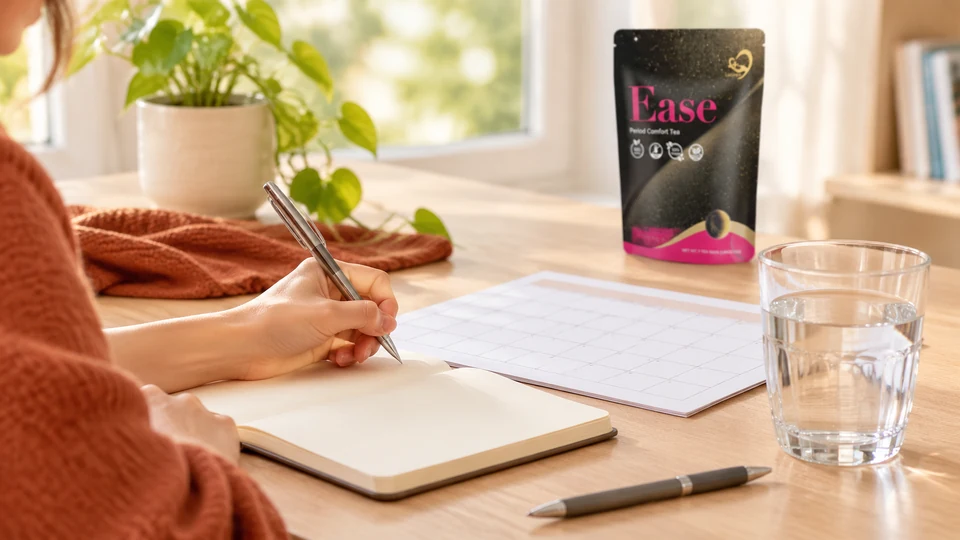
Write down the first day of bleeding, when the pain begins, how long it lasts, how severe it feels and what affects it. Include associated symptoms such as nausea, bowel changes, urinary pain or pain during sex. A short record across two or three cycles can make the appointment more productive.
Where Heat, Pain Relievers and Tea Fit
Heat
A heating pad, hot-water bottle or warm bath may ease ordinary menstrual cramps for some people. Use a comfortable temperature and avoid falling asleep with a heating device directly against the skin. Heat can be used as part of a routine while you continue to observe the pain pattern.
Over-the-counter pain relievers
Nonsteroidal anti-inflammatory drugs, including ibuprofen and naproxen, are commonly used for period pain, and a Cochrane review found them more effective than placebo for many people. They can cause side effects and are not suitable for everyone.
Follow the product label or advice from a clinician or pharmacist. Check first if you have a history of stomach ulcers, kidney disease, certain cardiovascular conditions, an allergy to these medicines, are taking anticoagulants, or may be pregnant. Do not change a prescribed medicine based on a tea article.
A warm herbal drink
A warm drink can add comfort, flavor and a pause during the menstrual phase. Evidence for herbal and dietary supplements in dysmenorrhea remains limited, and studies of a particular herb, extract or dose cannot automatically be applied to a multi-herb tea bag.
Tea works best as one layer of comfort after you have considered the warning signs and chosen any medicine safely. It does not diagnose the cause of pain, treat endometriosis or replace pain relief recommended by a healthcare professional.
What Ease Period Comfort Tea Is Designed For
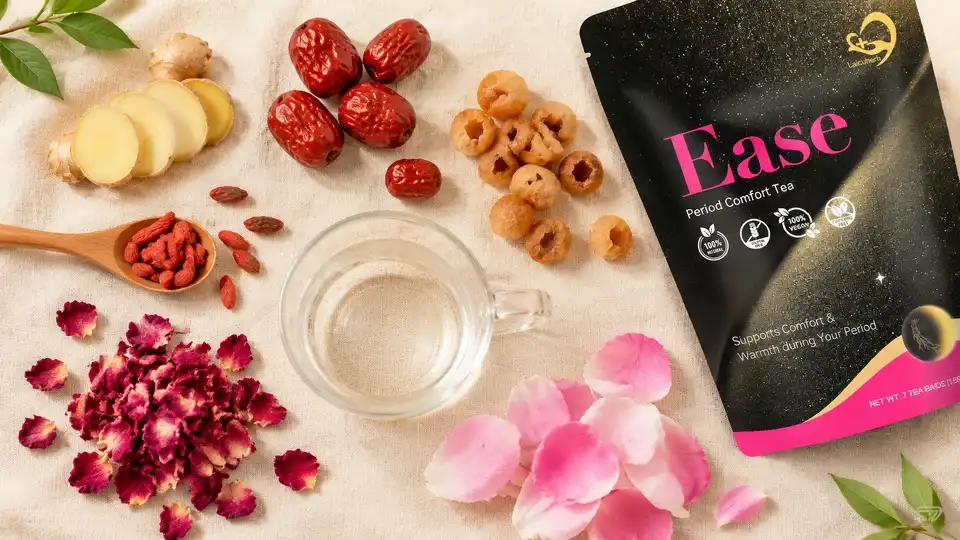
Ease Period Comfort Tea is positioned for the menstrual phase. Its seven-herb blend combines longan, red dates and wolfberry for a naturally sweet character with dried ginger, angelica, Pingyin rose and peony petal for a warm floral profile.
The product page presents the formula as caffeine-free because it contains no green tea, black tea or another commonly caffeinated tea ingredient. Anyone who must avoid even trace amounts of caffeine should still check the final package label and current product information.
The pack contains seven tea bags at 8 g each. Begin when bleeding starts, or one to two days before an expected period if that fits your tracking routine. Brew according to the current package directions and drink it warm. The product is intended as an oral beverage, not as a topical treatment or a replacement for medication.
The product page also states that Ease does not replace pain relief medicine. That boundary is important. A comfort ritual can be useful without being asked to manage a medical condition.
What Research Can and Cannot Say About Herbal Tea
Ginger is one of the better-studied ingredients in this area. A systematic review of randomized trials found that ginger powder reduced pain scores in primary dysmenorrhea studies, with trials using approximately 750 to 2,000 mg per day during the first three or four days of the cycle. Those results describe measured ginger powder taken at a defined dose. They do not establish the amount of ginger in a particular tea bag or predict what a cup of Ease will do.
A separate review examined cinnamon, fennel and ginger for primary dysmenorrhea and found reductions in pain intensity across the included studies, while also calling for more research. Again, the preparation, dose, duration and participant group matter.
That evidence supports continued research into individual herbs. It does not support calling a warm blend an endometriosis treatment or assuming that a traditional ingredient can address every cause of pelvic pain.
When a Comfort Tea Should Wait
Do not use a tea as the first response to sudden severe pelvic pain, fainting, fever, heavy bleeding or pain with a late period. Seek urgent medical care when symptoms are intense, rapidly worsening or accompanied by weakness, dizziness or other acute changes.
Arrange a routine appointment when pain repeatedly affects work, school, sleep, exercise or relationships. Also seek advice when symptoms are new, when ordinary measures stop helping, or when pain returns outside the menstrual phase.
Pregnant or breastfeeding people, anyone taking regular medication, and anyone managing a chronic condition should review the complete ingredient list with a healthcare professional before starting a new herbal product.
Conclusion
Period comfort tools are useful when the pain pattern is familiar, mild and temporary. Heat can provide warmth, suitable pain relievers may reduce cramps, and Ease Period Comfort Tea can add a caffeine-free herbal drink to the menstrual-phase routine.
Severe, worsening or unusual pain needs a different next step: evaluation. No herbal tea has been shown to diagnose or treat endometriosis, and a comfort drink should never delay care. Use Ease for the modest role it is designed for—warmth, taste and everyday menstrual comfort—after you have checked the warning signs.
COMFORT HAS A LIMIT
Use warmth, appropriate pain relief and a caffeine-free tea for familiar mild discomfort; seek evaluation when pain is severe, worsening, unusual or disruptive.
FAQ
Q: 1. Can Ease Period Comfort Tea replace pain relief medicine?
A: No. It is a caffeine-free herbal tea for warmth and everyday menstrual comfort. Follow medical advice for pain relievers and seek care if cramps are severe, worsening or interfering with daily life.
Q: 2. Is there an herbal tea that treats endometriosis?
A: Current evidence does not establish that any herbal tea treats endometriosis. Persistent or unexplained pelvic pain needs assessment by a healthcare professional.
Q: 3. When should I drink Ease Period Comfort Tea?
A: It is positioned for the menstrual phase. Start when bleeding begins, or one to two days beforehand if that suits your tracking routine, and follow the current package brewing directions.
Q: 4. What is in Ease Period Comfort Tea?
A: The blend contains longan, red dates, wolfberry, angelica, dried ginger, Pingyin rose and peony petal. It is packed as seven 8 g tea bags and is presented as caffeine-free.
References
1. Becker CM, et al. ESHRE guideline: endometriosis. Human Reproduction Open. 2022.
Related Readings
Period Breakouts vs Barrier Dryness: Why Skin Glow Is Not an Acne Treatment
One Oil, Four Labels: How to Choose a Sea Buckthorn Oil Softgel
PMS Tea vs Hormone Balance Tea vs Luteal Sleep Tea: Why the Names Don’t Match